
Metro Transit’s Gold Line sets a new standard for the transit customer experience
DESIGNER
2025
The METRO Gold Line is setting a new benchmark for bus rapid transit (BRT) in Minnesota. As the state’s first BRT line to operate primarily within dedicated lanes, it delivers a faster, more reliable ride while introducing features that elevate the passenger experience. From upgraded stations with heated waiting areas and real-time information displays to intuitive fare collection and level boarding, every detail is designed with riders in mind.
Spanning 10 miles from downtown St. Paul through east metro neighborhoods and into the suburbs, the Gold Line connects four communities and significantly expands access to jobs, health care, education, shopping and entertainment. For the 41,000 residents living within a half-mile of its stations, including more than 16% of households without a vehicle, the Gold Line offers a dependable, high-quality transit option that meets modern travel needs.
“Because the corridor has a fairly high transit-dependent population, there has long been a demand for more service on the east side,” said Alicia Vap, Gold Line BRT project director at Metro Transit. “The Gold Line reaches this new market, providing access between communities as well as connections to light rail and other BRT lines that transfer people to the airport and other destinations.”
Construction on the project began in 2022 and the landmark Gold Line BRT opened in spring 2025.
“The Gold Line is a true success story because of the collaboration between Metro Transit, the regional counties and all the project partners,” said Michelle Spielmann, HNTB project controls manager. “Everyone was committed to the same goal, and that teamwork is what allowed us to deliver the project on time and on budget.”
HNTB served as program management consultant throughout the Gold Line’s design and construction, providing critical oversight in environmental documentation, grant submittals, contract administration, constructability reviews, risk mitigation, cost estimating and project controls.
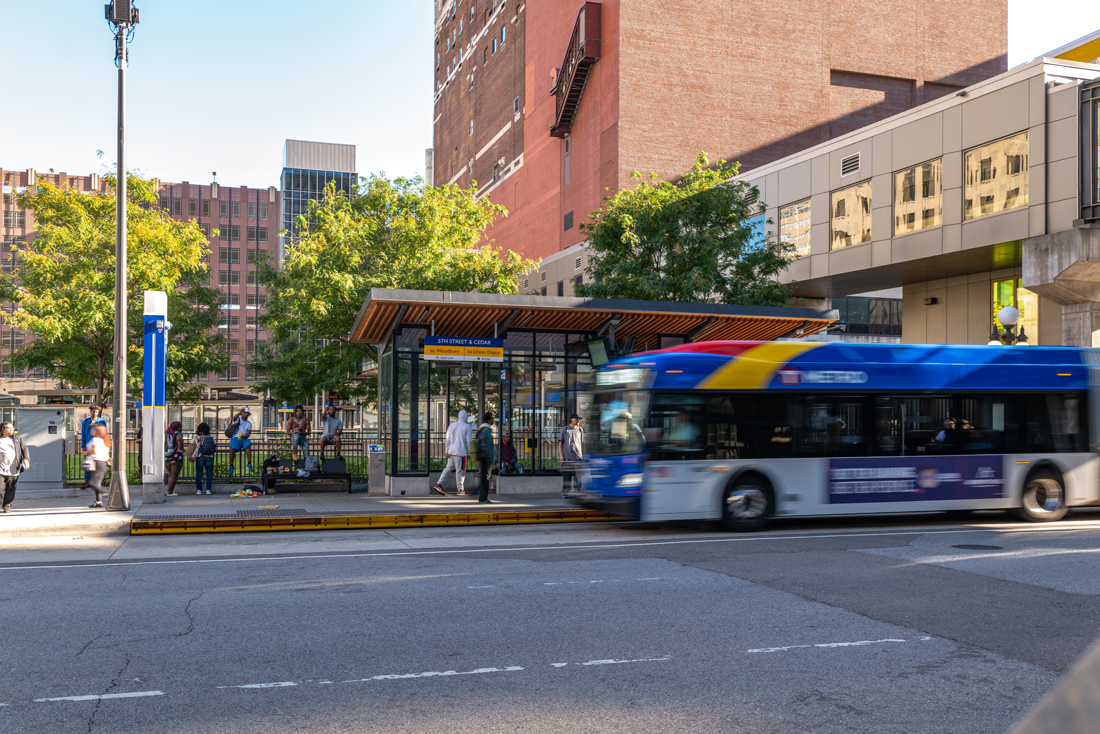


A changing transit marketplace
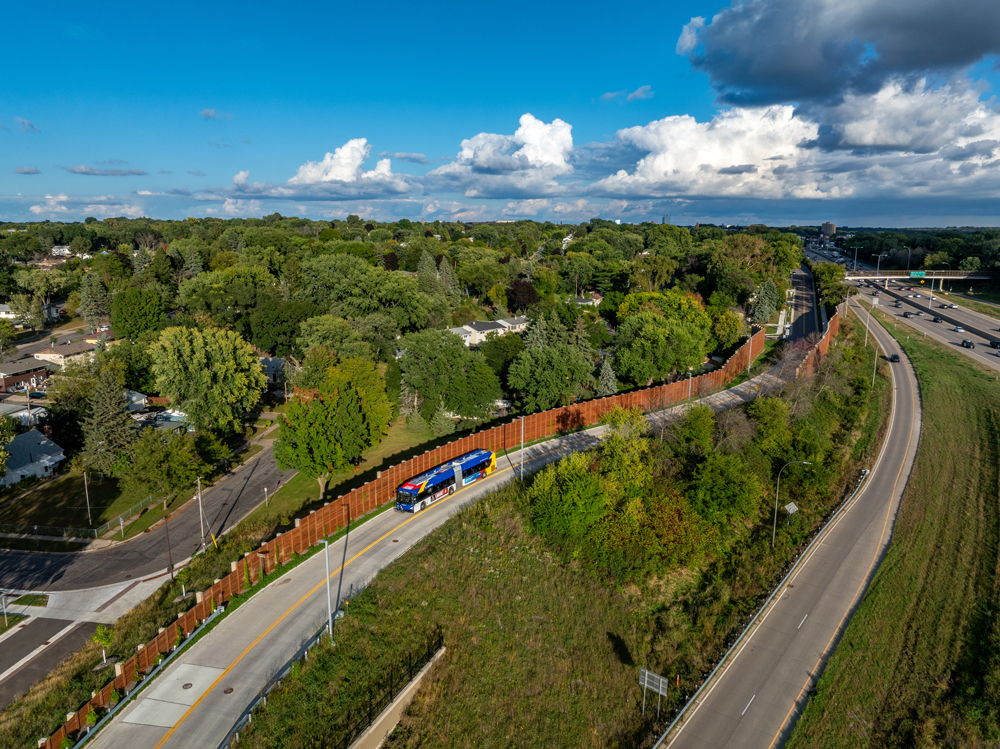
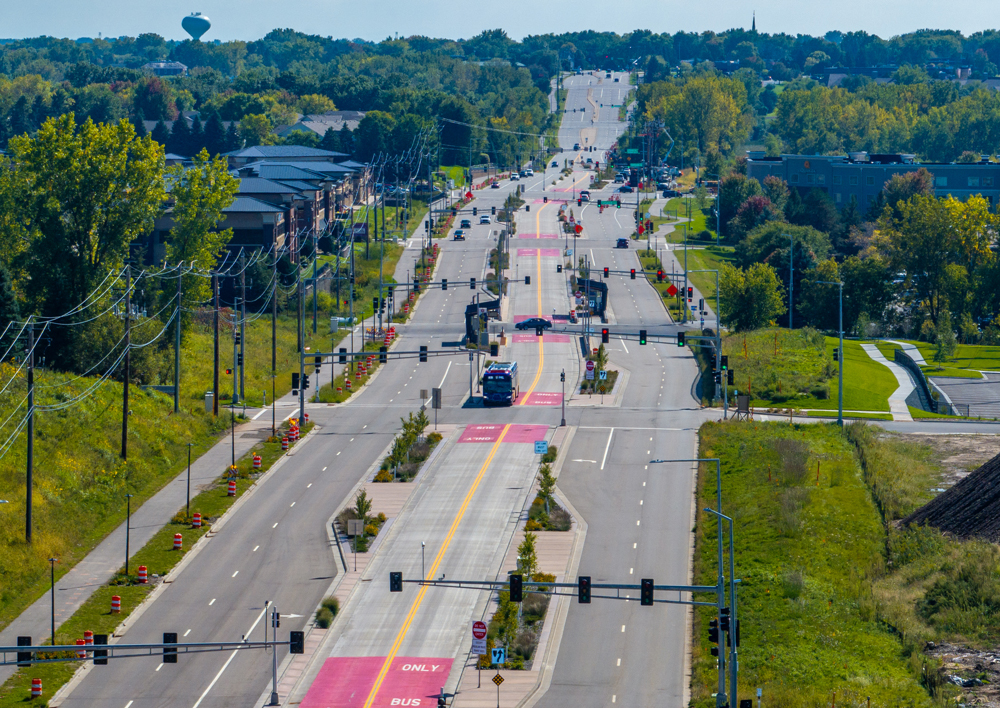
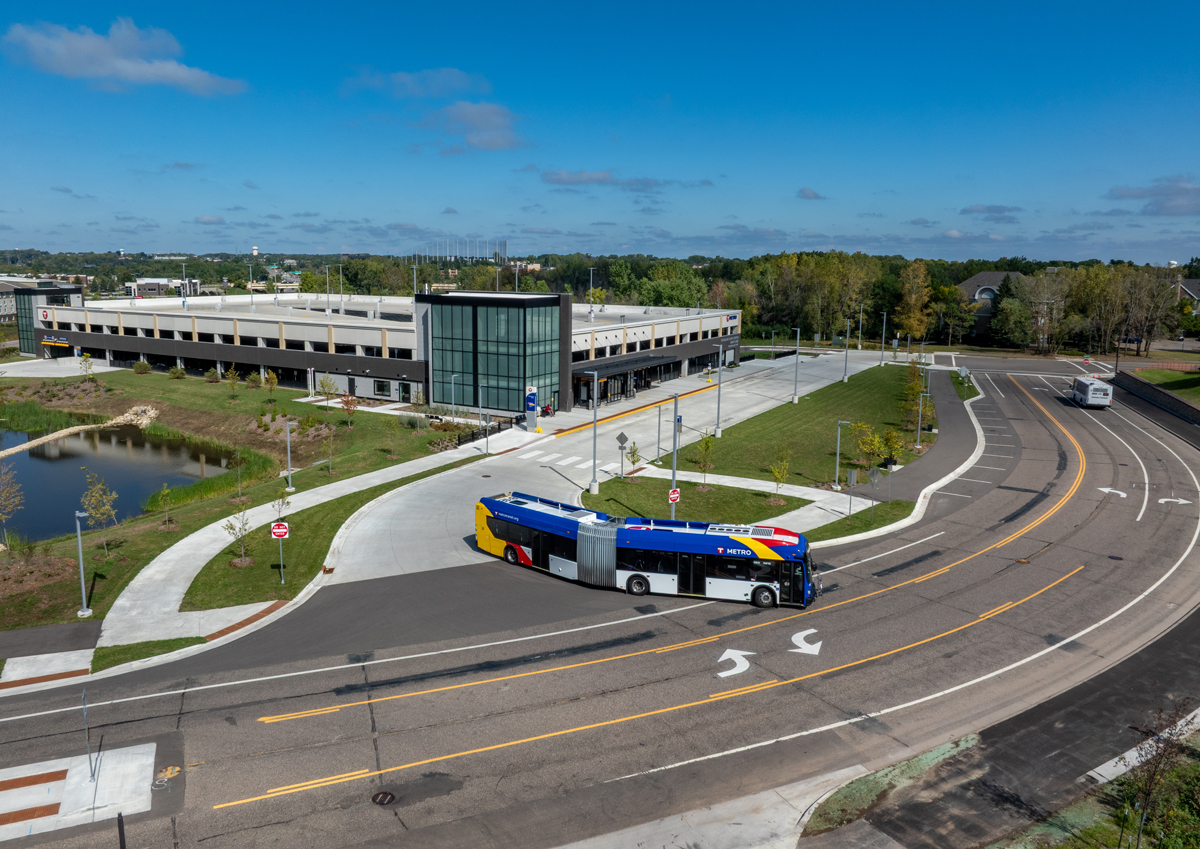
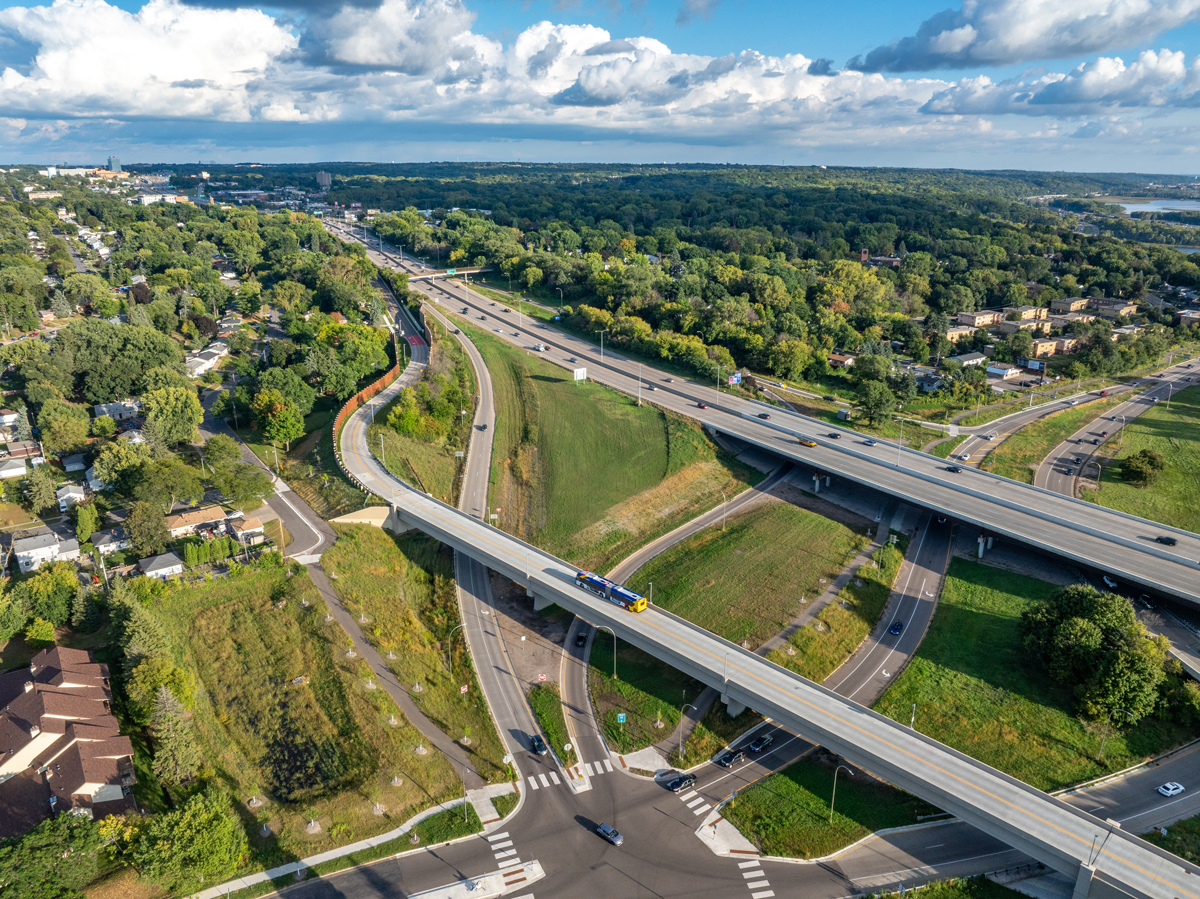
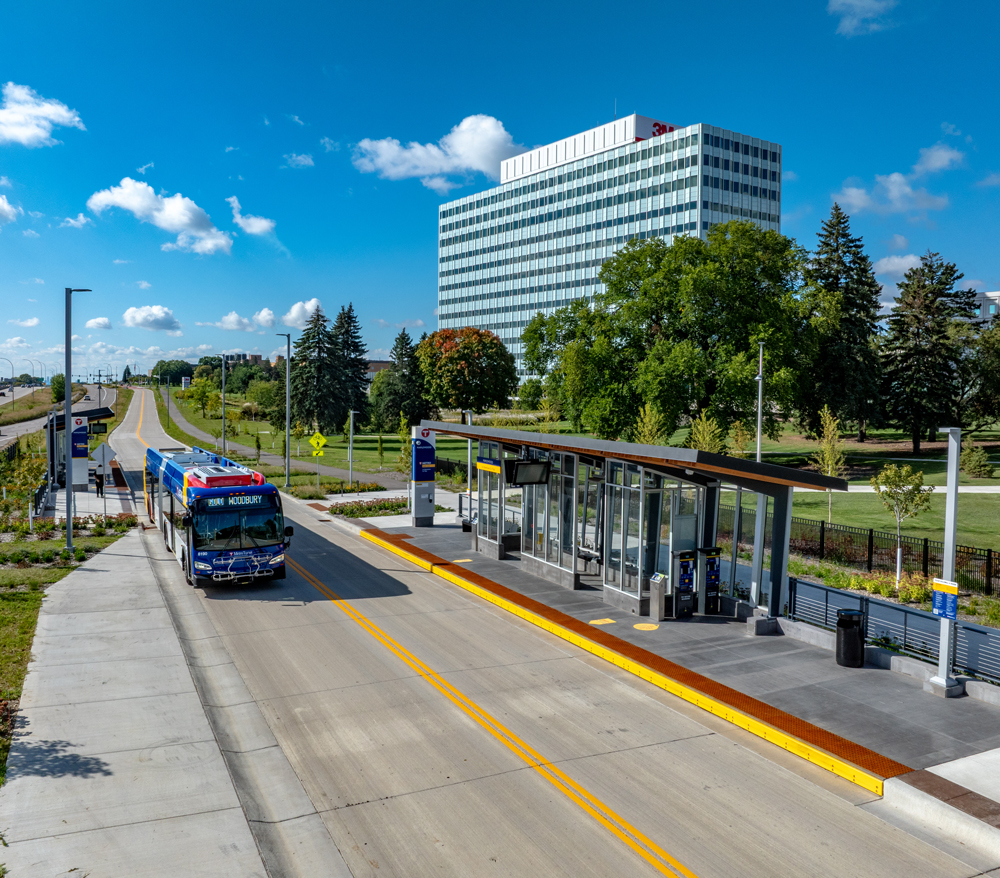
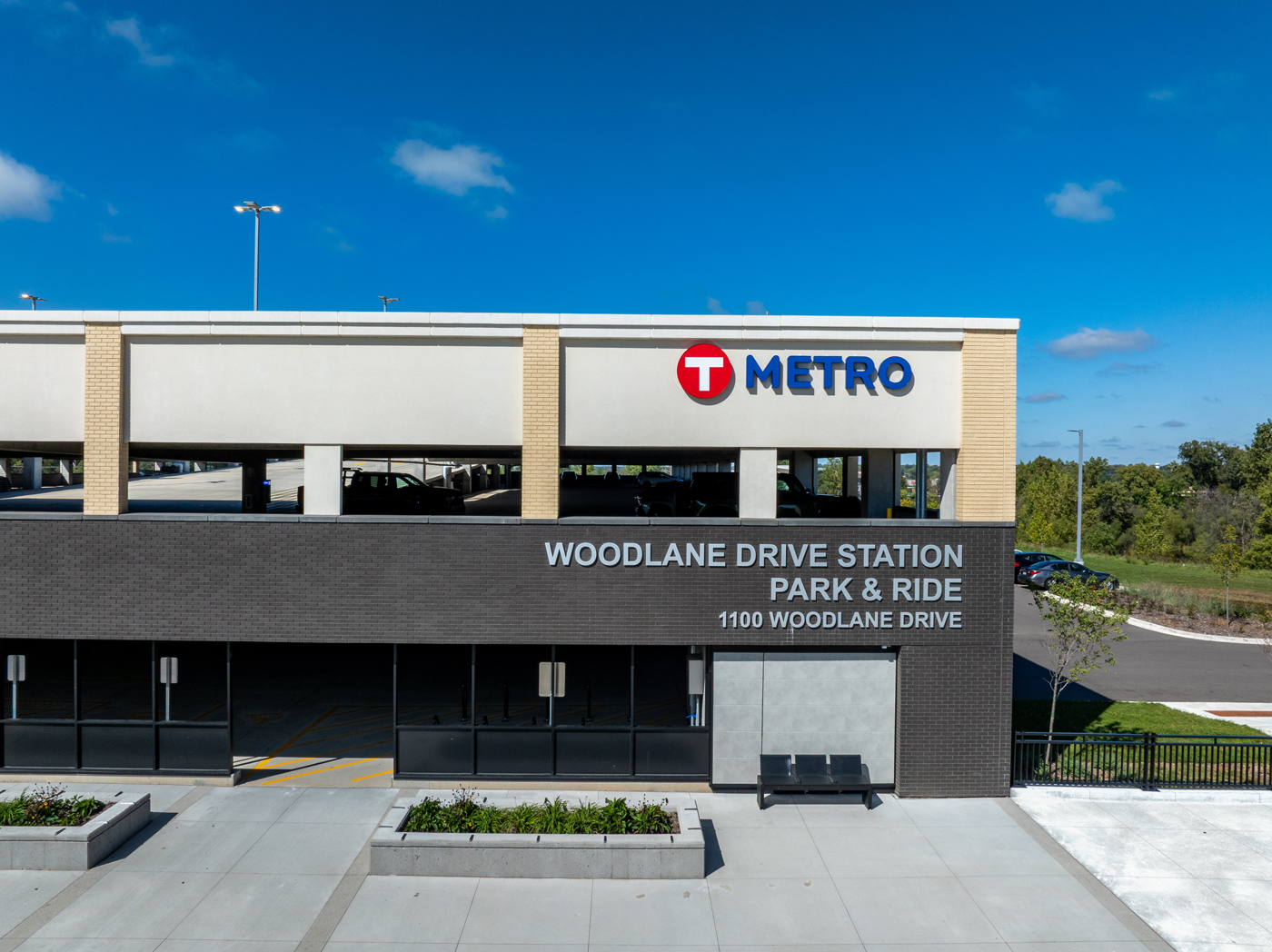
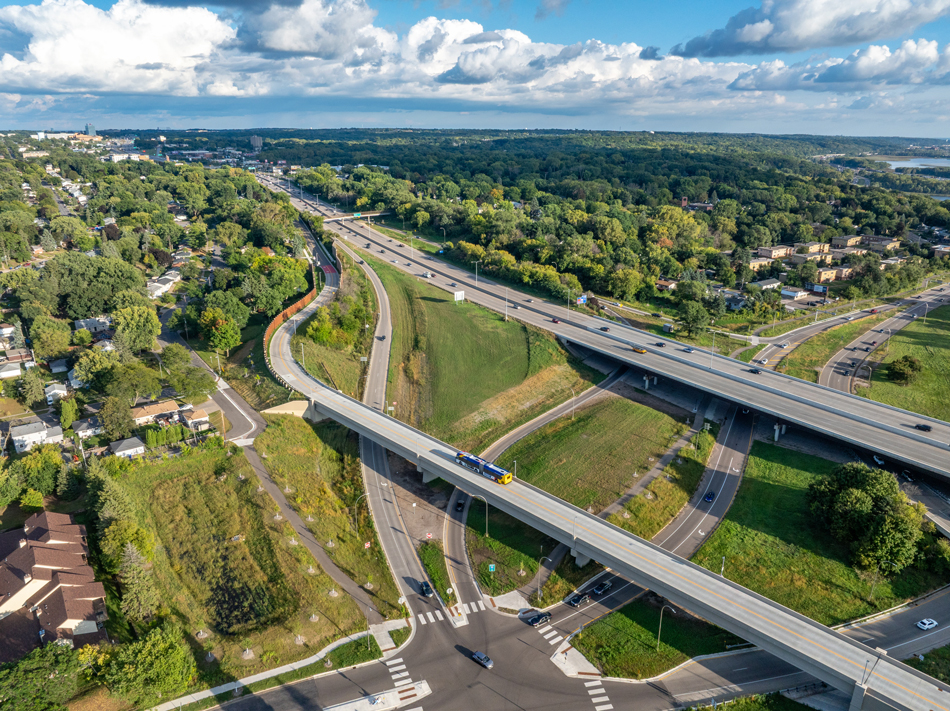
To deliver a reliable service that best meets the region’s travel needs, nearly 70% of the 10-mile Gold Line route operates on dedicated guideways. The corridor includes four new BRT-exclusive bridges, two underpasses, 16 stations and three park-and-ride lots that combine to make the Gold Line a fast and consistent transportation option.
The system is served by a mixed fleet of 60-foot-long buses. The busway follows Interstate 94 along much of its route, allowing passengers to travel the entire corridor without transferring, with trips every 10 minutes during most weekday hours, every 15 minutes on weekends, and every 30 minutes early mornings and nights.
These frequent, all-day trips respond to shifting travel patterns.
“Over the past several years, we’ve seen that people’s days in and out of the office are changing,” Vap said. “Serving a downtown market, we still have morning and evening peaks, but the evening peak is starting earlier and extending longer. We’ve seen strong demand for midday and weekend service. Having seven-day-a-week all-day service on the Gold Line delivers the frequency people want and need.”
St. Paul’s east metro residents and businesses will further benefit from transit-oriented development spurred by the Gold Line’s opening. Multifamily housing projects are already being built along the corridor, in the expectation that people will want to live where they have easy access to transit.
“The METRO Gold Line delivers fast, frequent all-day and reliable service that best meets today’s travel behaviors and is a game-changer for access for East Metro residents and transit riders. The project represents a strong commitment to serving the East Metro community, and we are grateful for the collaboration and funding from our project partners that brought this vision to life.”
“The Gold Line is a true success story because of the collaboration between Metro Transit, the regional counties and all the project partners. Everyone was committed to the same goal, and that teamwork is what allowed us to deliver the project on time and on budget.”


Exceptional customer experience
In creating the Gold Line, Metro Transit gave significant attention to delivering a customer experience that would keep riders coming back. That positive journey begins with a swift and seamless ride and culminates in expanded access, thoughtfully designed stations and abundant passenger amenities.
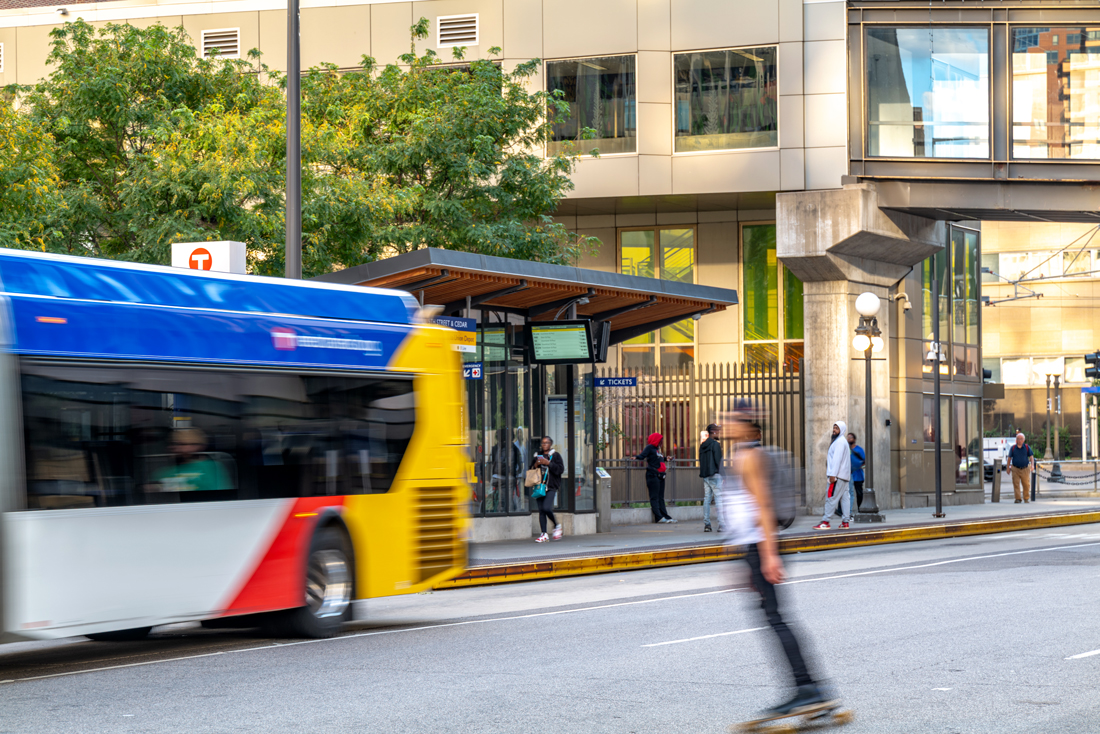
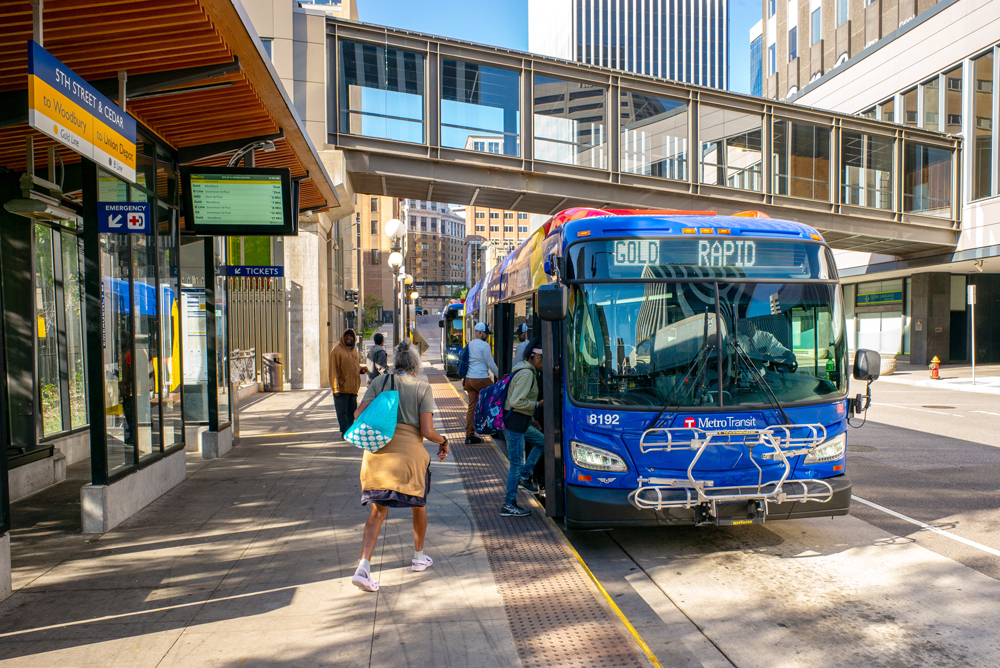
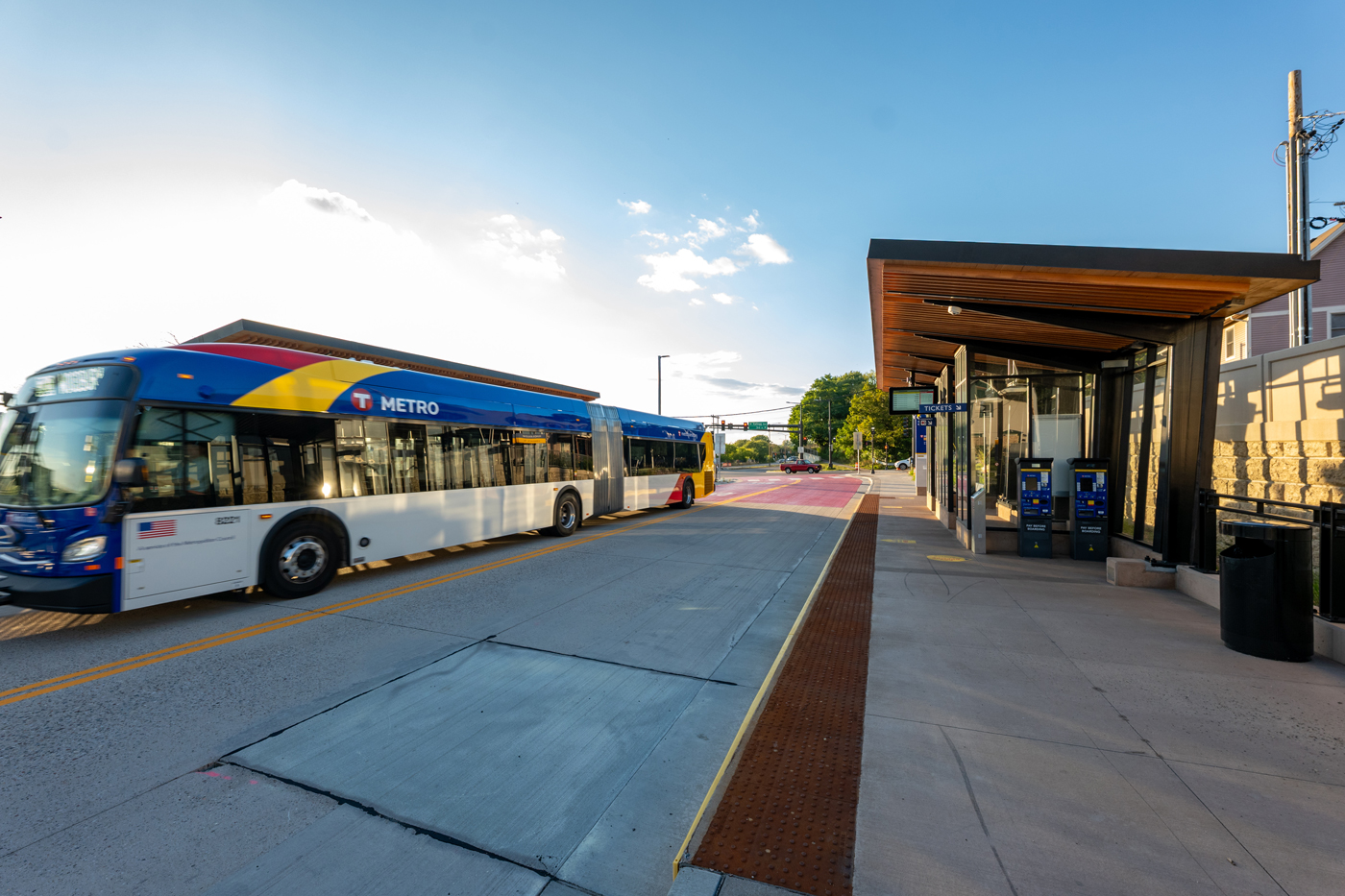
“Much of the focus in the design process was on the stations,” Vap said. “Their shape sets them apart from the rest of the system’s transit shelters. The real wood and laminate finishes installed on the underside of the roofs brings a natural element to the station architecture. The public has responded very favorably to these unique characteristics.”
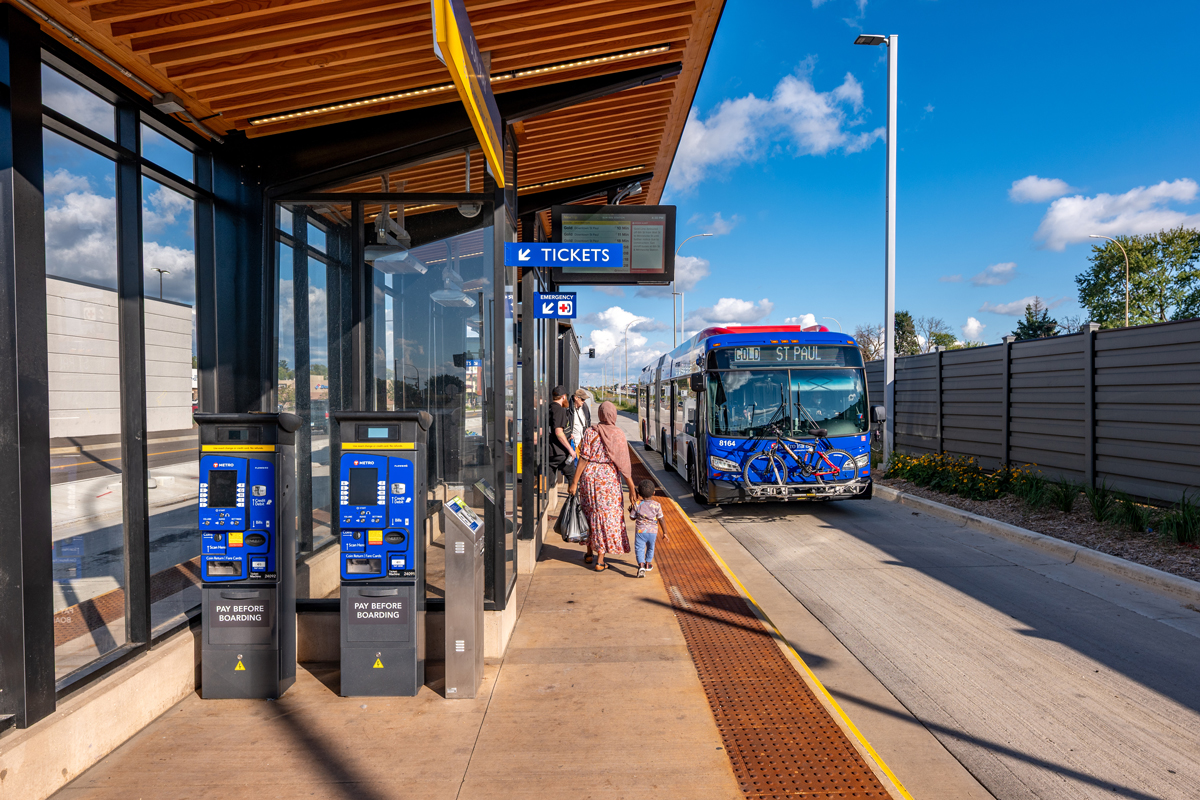
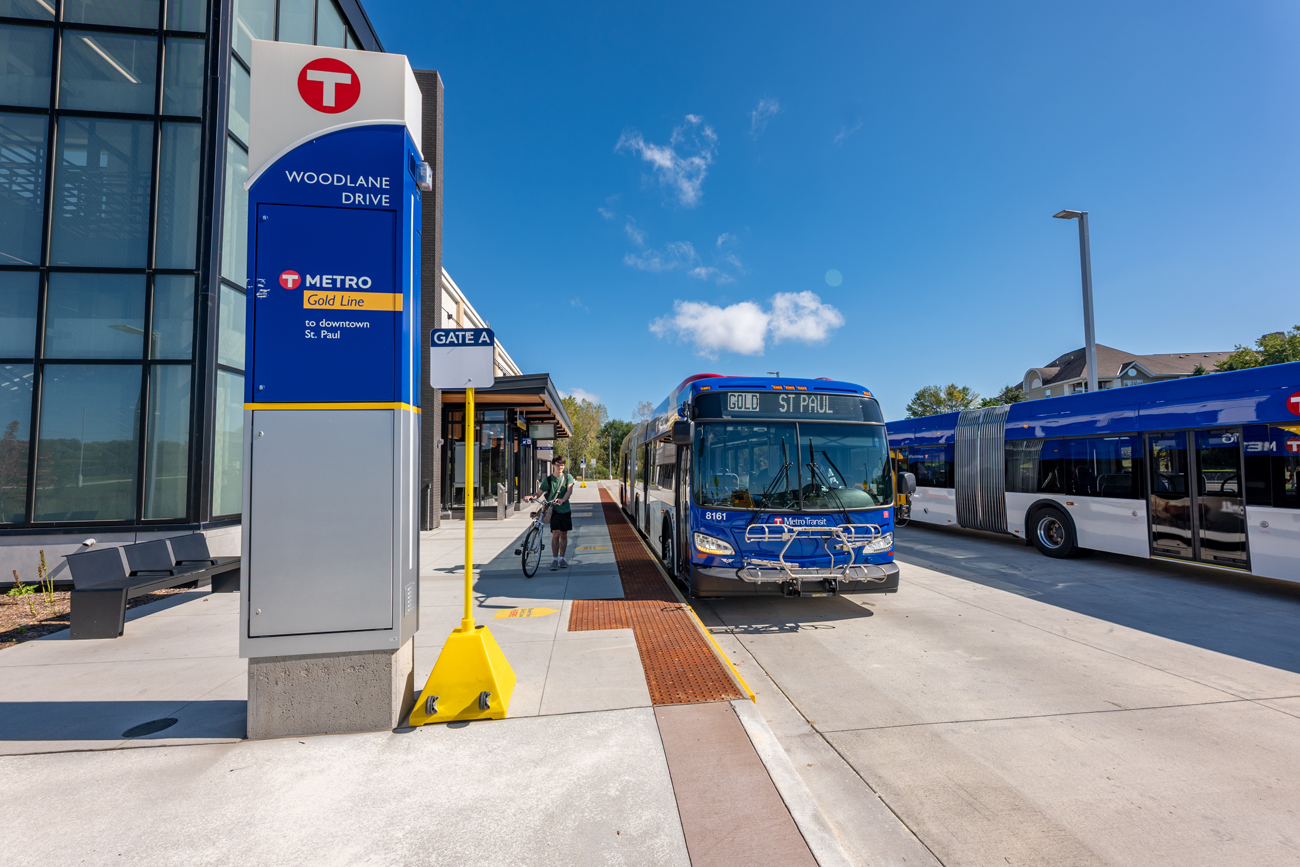
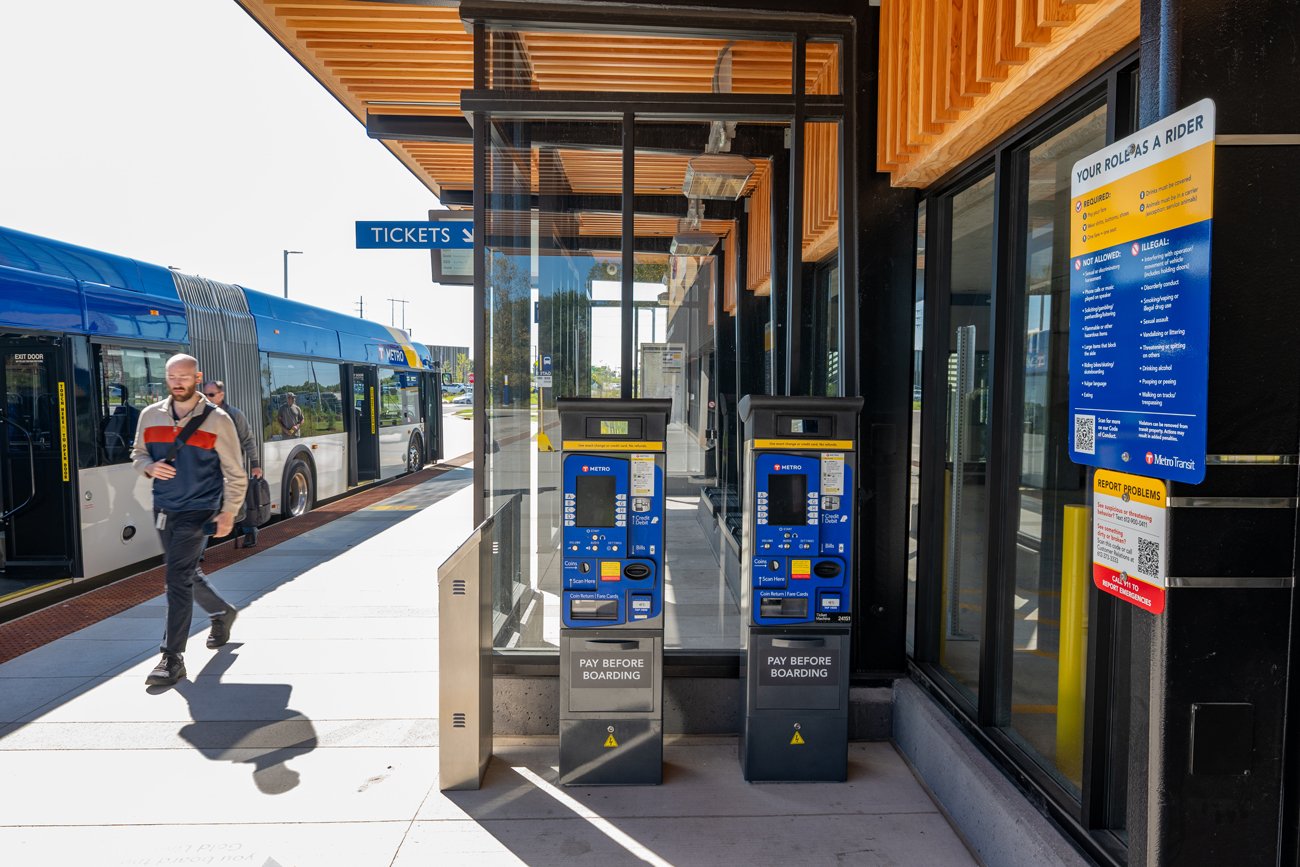
In addition to the distinctive station architecture, each station has heated waiting areas that provide relief during Minnesota’s cold winters. Fare collection points are consistently located at each station, making payment and trip planning straightforward. Real-time electronic displays keep passengers informed, while white-light beacons signal the arrival of each bus.
Accessibility is built into every station, park-and-ride facility and bus. Passengers with visual impairments benefit from audible schedule updates at each shelter, and raised platforms paired with low-floor buses allow for smooth, level boarding. Tactile tiles mark ADA seating areas, helping all passengers locate seats with ease.
Cyclists are supported by bike lanes along much of the route and racks on every bus, while Wi-Fi on the buses keeps riders connected throughout their trips. Expanded on-demand rideshare service makes travel to and from stations easier for all.
With efficiency and safety as project priorities, Metro Transit introduced new transit signals on the Gold Line busway to manage bus and traffic operations. Stations are equipped with emergency call buttons. The shelters and the buses have live-feed cameras that connect directly to the Metro Transit Police Department’s and Bus Operation’s control centers.
Since the Gold Line opened, the dedicated guideways have delivered reliable speed and on-time performance. Ridership is on the rise, evidence that the project has elevated passengers’ transit experience.
“The METRO Gold Line delivers fast, frequent all-day and reliable service that best meets today’s travel behaviors and is a game-changer for access for East Metro residents and transit riders,” Vap said. “The project represents a strong commitment to serving the East Metro community, and we are grateful for the collaboration and funding from our project partners that brought this vision to life.”
By the Numbers
Navigating a Complex Funding Path
Securing federal investment for Gold Line BRT required careful coordination and expertise. As program management consultant, HNTB collaborated with Metro Transit through each critical step, ensuring the project met all Federal Transit Administration (FTA) requirements and milestones:
- Led the National Environmental Policy Act (NEPA) process, culminating in a Finding of No Significant Impact, a major prerequisite of federal funding approval.
- Prepared and submitted the New Starts Project application, earning a medium-high project rating.
- Managed the Entry to Engineering application.
- Supported the Full Funding Grant Agreement Application, resulting in the award of $239 million in federal funding under the FTA Capital Investment Grant program.
“The Gold Line, like many New Starts projects nationwide, faced rigorous requirements and challenges,” said Chris Kopp, HNTB national practice consultant in transportation planning and finance. “Our team worked closely with Metro Transit from the earliest application stages through to the Full Funding Grant Agreement, demonstrating how effective project management can accelerate delivery and maximize federal investment.”
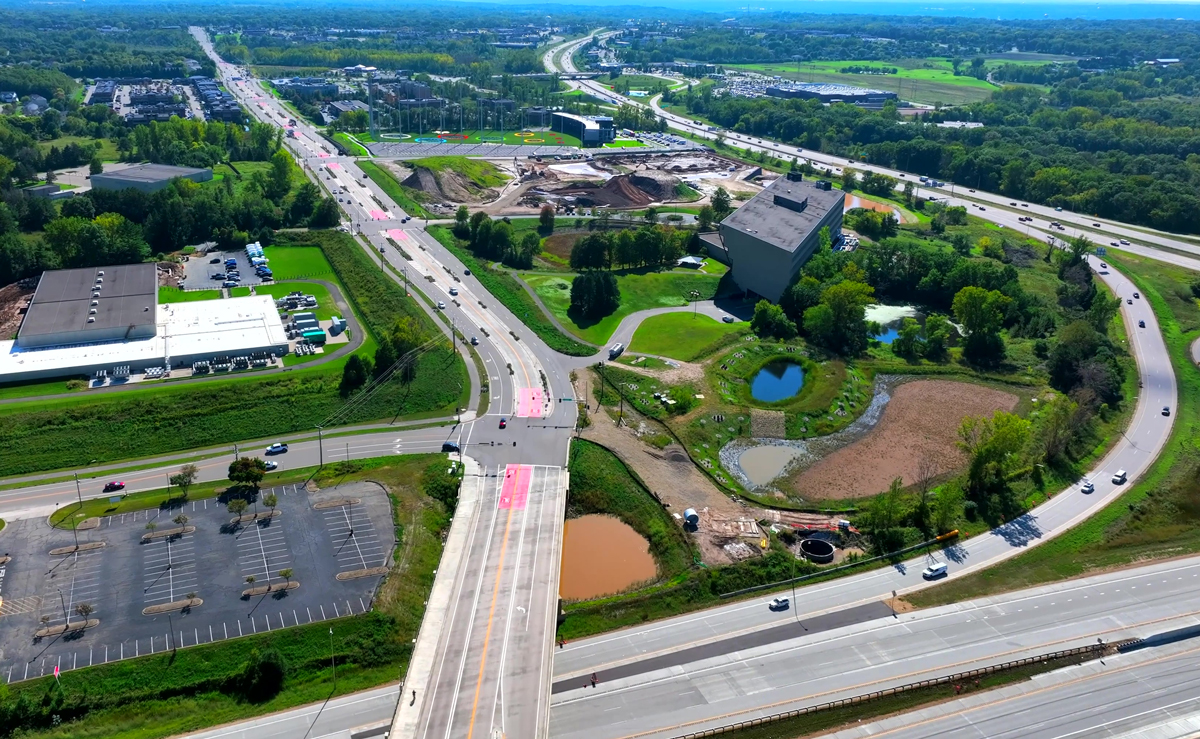
The new BRT standard
Future plans include extending Gold Line service to downtown Minneapolis by 2027 to create a true crosstown route.
“With few peers in North America, the Gold Line is an example of how effectively a BRT can work, using a dedicated guideway, upgraded station stops and signage, updated buses and branding to provide expedited service between two points,” said Sara Hage, HNTB vice president and Minnesota office leader. “People in the East Metro now have a high-quality transit solution that models a BRT’s overall function and the service it can deliver. The Gold Line sets a new standard for BRT investments in Minnesota and beyond.”
SEE MORE ARTICLES
Lynnwood Link Extension
Featured People