
Kansas City suburb welcomes first express lanes to mitigate congestion
DESIGNER
2026
In the Kansas City metropolitan area, growth has been pushing steadily south and west. Few places reflect that momentum more than Overland Park, Kansas.
As one of Kansas’ largest and steadily growing cities, Overland Park depends on U.S. 69 as a critical north-south connection for daily commuters, regional employers and continued economic development. With approximately 90,000 motorists traveling the corridor each day and travel times projected to triple by 2050, the state’s busiest four-lane highway needed more than a conventional widening: it needed a new approach to long-term mobility.
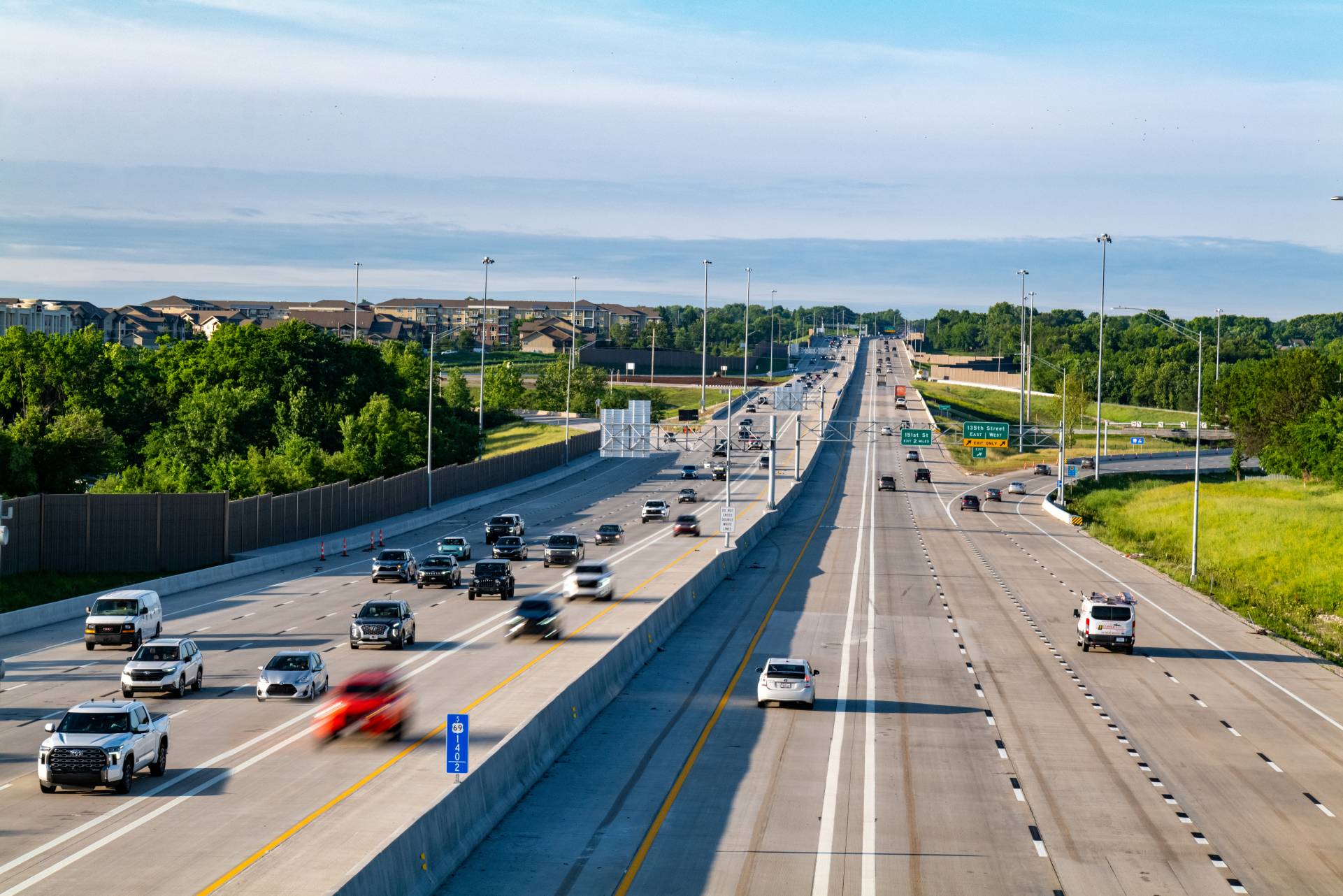
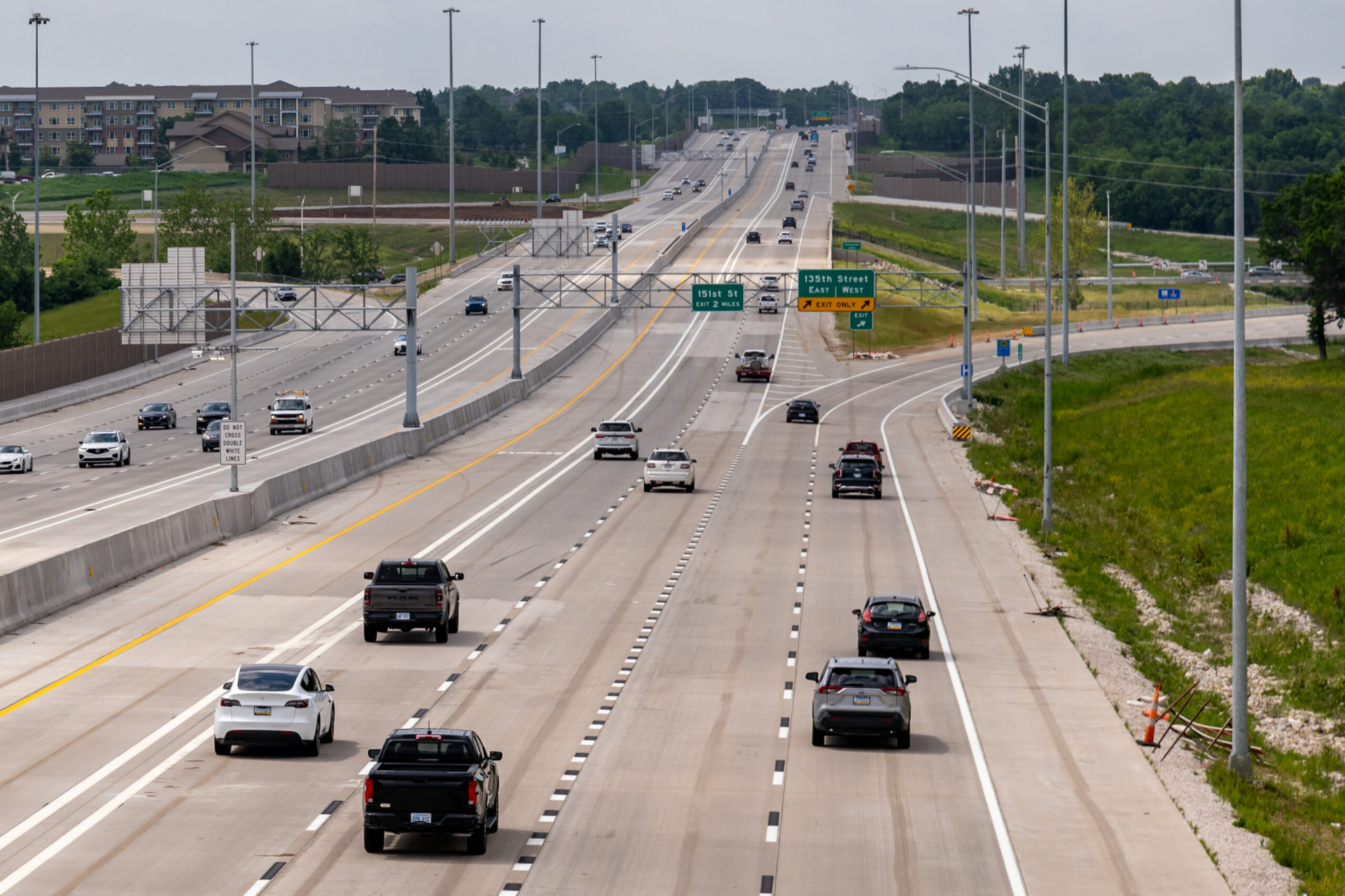
With the U.S. 69 Corridor Modernization and Expansion Project, known as 69Express, the Kansas Department of Transportation (KDOT) introduced Kansas’ first express lanes, rebuilt a critical six-mile section of U.S. 69 and delivered the corridor 10 months ahead of schedule. The project modernized one of the Kansas City region’s most important suburban corridors while creating a more reliable travel option for communities, commuters and employers throughout the region and beyond.
KDOT launched 69Express in 2020 and selected HNTB as its project management consultant for the landmark design-build effort, which is the largest construction project in the agency’s history. HNTB collaborated with KDOT to guide 69Express from preliminary design and procurement through final design and construction, managing risk and coordinating technical oversight, public involvement, tolling integration and other critical workstreams.
“Working in close collaboration with the Ames Construction and Emery Sapp & Sons Joint Venture, the project team developed a streamlined approach to design and to accelerate the schedule and deliver U.S. 69 Express to the public ahead of schedule.”
Support for first-time express lanes
KDOT had identified U.S. 69 as a priority under its new Eisenhower Legacy Transportation Program (IKE), which aims to modernize Kansas’ transportation system.
For years, studies had pointed to express lanes as a potential long-term congestion management for U.S. 69. Through the 69Express environmental assessment and supporting studies, KDOT confirmed express lanes as the project’s preferred alternative. The approach also aligned with public feedback calling for improvements that could be delivered quickly, cost-effectively and with long-term value for the community.
Under IKE, communities partner with KDOT to advance locally important transportation investments. For 69Express, KDOT and Overland Park developed an approach that allowed the city’s local contribution to be supported over time through express lane toll revenue, aligning the funding strategy with the corridor’s long-term mobility benefits.
Advancing the concept required close coordination among KDOT, the City of Overland Park, the Kansas Turnpike Authority (KTA) and state leaders. Because 69Express would introduce Kansas’ first express lanes, building community understanding and support was essential. The project team worked closely with city leaders and community stakeholders to explain how express lanes could improve reliability, maintain free general-purpose lanes and create a sustainable approach to managing future traffic growth.
“U.S. 69 is central to Overland Park’s vitality, making corridor improvements a shared priority for the community and KDOT,” said Craig Cogan, HNTB project manager. “An early, strong partnership between KDOT and city leadership was instrumental in building consensus and community support for the Express Lane alternative.”
In June 2021, express lanes received favorable votes from the approval bodies, clearing the way for one northbound and one southbound express lane to be added to U.S. 69’s four existing, general-purpose lanes.
In November 2021, the Overland Park City Council approved an expanded agreement with KDOT to include reconstruction of a key interchange just south of the six-mile express lanes corridor. Designed to support the city’s continued southward growth, the interchange improvements included street widening, connecting roundabouts and new directional ramps.
With the funding strategy, public approvals and project scope in place, KDOT moved quickly to structure a delivery approach that could turn years of planning into near-term construction progress.
Building trust before breaking ground
When construction began, the team maintained continuous communications through a robust 69Express project website, newsletters, media coverage, social media, daily text messages and community outreach events. As the project neared completion, messaging shifted to public education about express lane benefits, how to use the lanes and how to obtain transponders that provide reduced toll rates.
“Public engagement was essential to helping communities understand the purpose of the express lanes and the mobility benefits they would deliver,” Cogan said. “It was critical to the project’s success.”


Collaborative delivery
From the beginning, KDOT’s goals for 69Express were clear: build strong partnerships, successfully implement Kansas’ first express lanes, maximize value and minimize impacts to travelers during construction. KDOT also established key milestones to open the express toll lanes by 2026 and complete the project by fall 2026. Meeting those goals required a delivery structure grounded in collaboration, flexibility and shared accountability.
“69Express relied on partnerships not only between KDOT, Overland Park, KTA and the Federal Highway Administration, but also with the design-build contractors and designers,” said Jesse Kuhlen, HNTB design oversight lead and department manager. “Working in close collaboration with the Ames Construction and Emery Sapp & Sons Joint Venture, the project team developed a streamlined approach to design and construction to accelerate the schedule and deliver U.S. 69 Express to the public ahead of schedule.”
Overland Park also supported the accelerated schedule by authorizing overnight work, giving crews additional flexibility to complete complex construction activities while limiting daytime traffic impacts.
During the three-year design and construction phases, HNTB staff, KDOT’s project director and the design-build team co-located, allowing issues to be identified and resolved quickly. Working closely with KDOT, HNTB brought multidisciplinary resources, including national tolling expertise, to help guide each phase of delivery.
“To support efficient delivery, HNTB focused on the issues that mattered most to KDOT,” Cogan said. “We coordinated multiple phases so critical tasks could advance in parallel. Because we understood KDOT’s priorities and constraints, we could help anticipate decisions, resolve issues at the appropriate level and maintain progress across the program.”
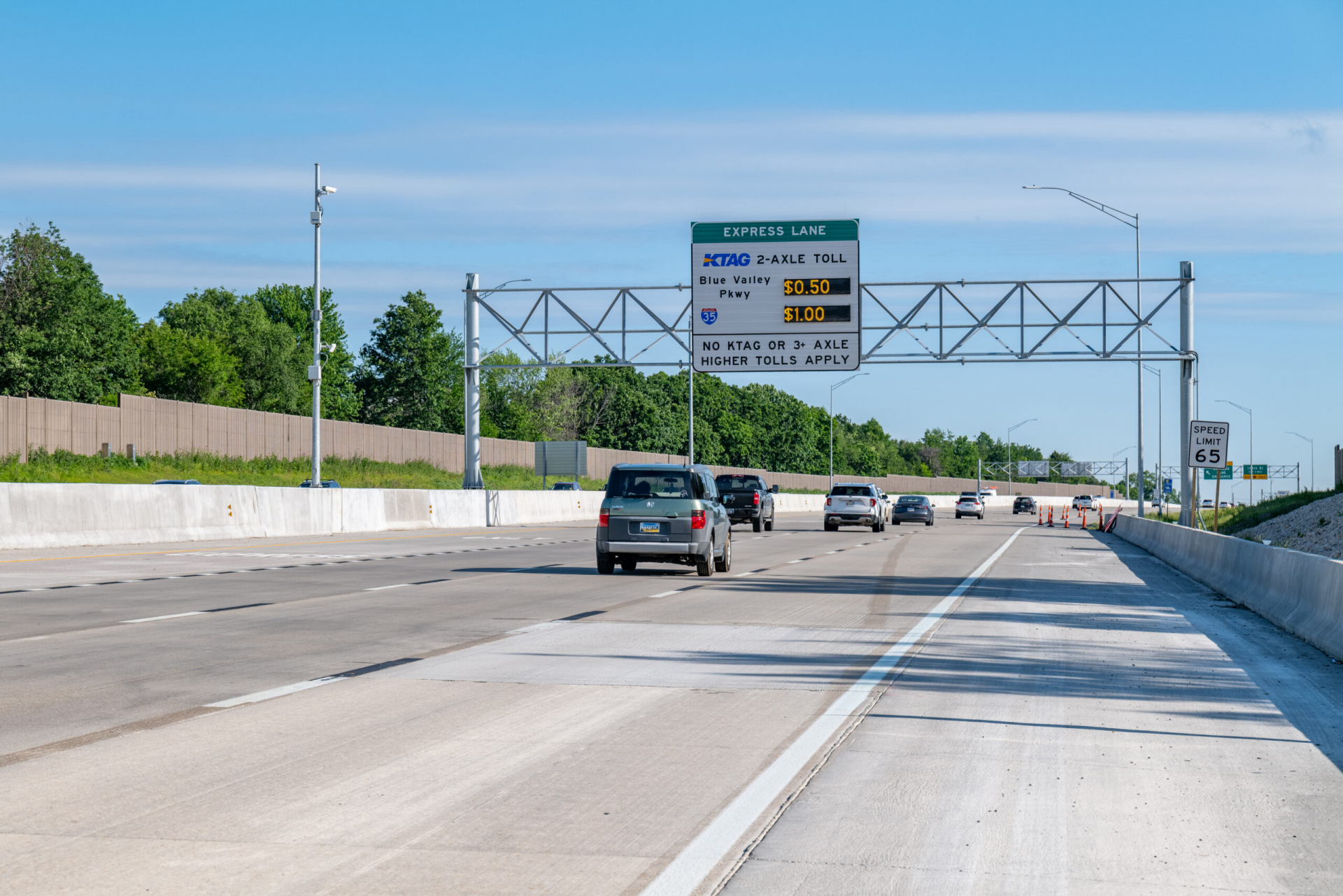
HNTB also helped coordinate the agreements and technical interfaces needed to bring cashless tolling to the corridor. The firm worked closely with KDOT, KTA, the design-build team and KTA’s tolling technology provider to align field construction with tolling infrastructure, maintain daily communication and resolve challenges collaboratively.
“69Express shows how technology can help drivers move more efficiently while supporting the region’s long-term needs,” said Bruce Meisch, KTA’s director of technology. “As Kansas’ first express lanes, the project demonstrates how innovative tolling solutions can expand options and keep the customer experience simple and reliable.”
The result was a delivery model built on partnership, alignment and shared accountability. It helped KDOT implement Kansas’ first express lanes, maintain mobility during construction and maximize the value of its investment, while enabling the design-build team to open 69Express 10 months ahead of the contractual milestone.
“69Express shows how technology can help drivers move more efficiently while supporting the region’s long-term needs. As Kansas’ first express lanes, the project demonstrates how innovative tolling solutions can expand options and keep the customer experience simple and reliable.”
Rebuilding a critical corridor
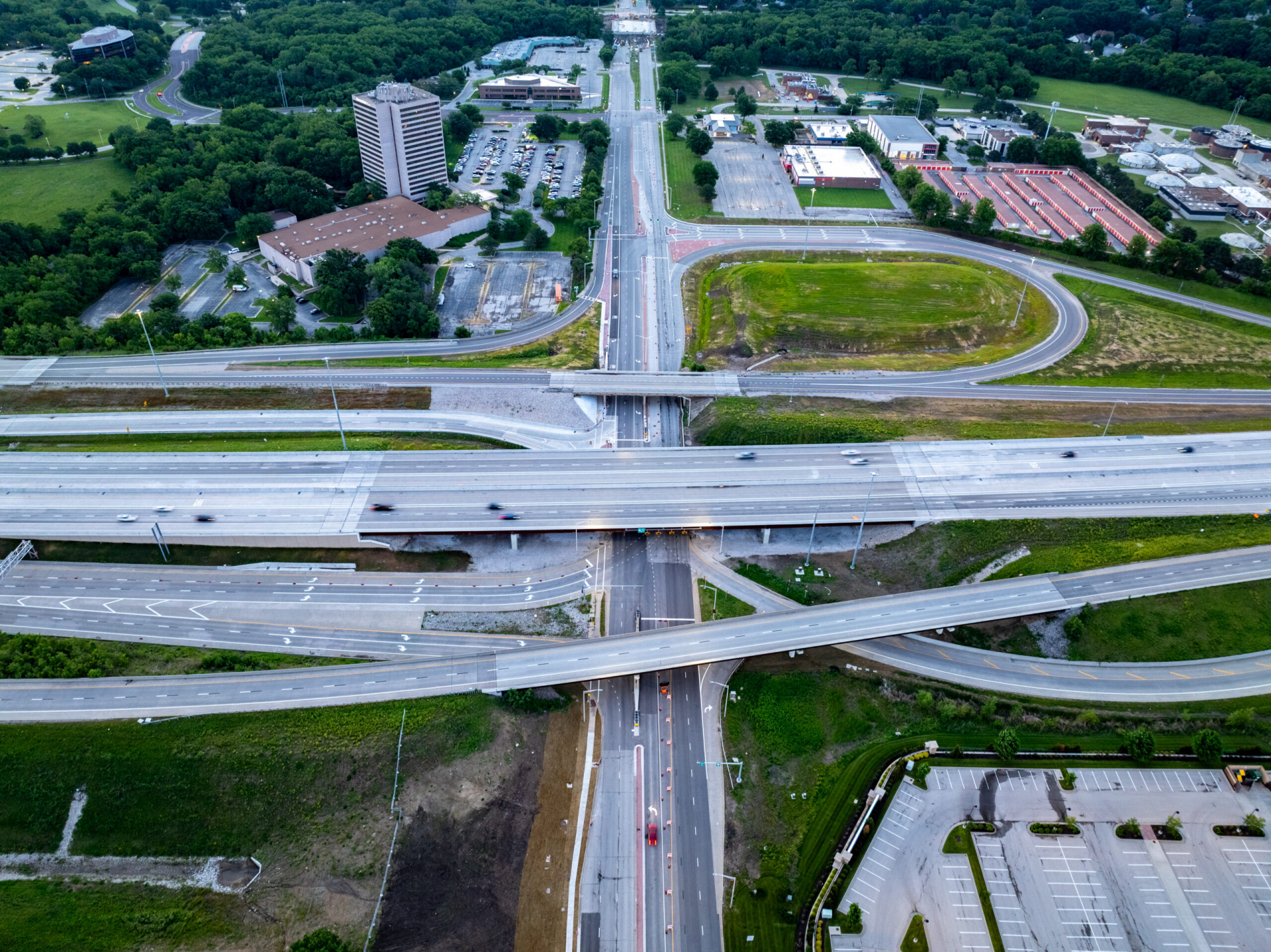
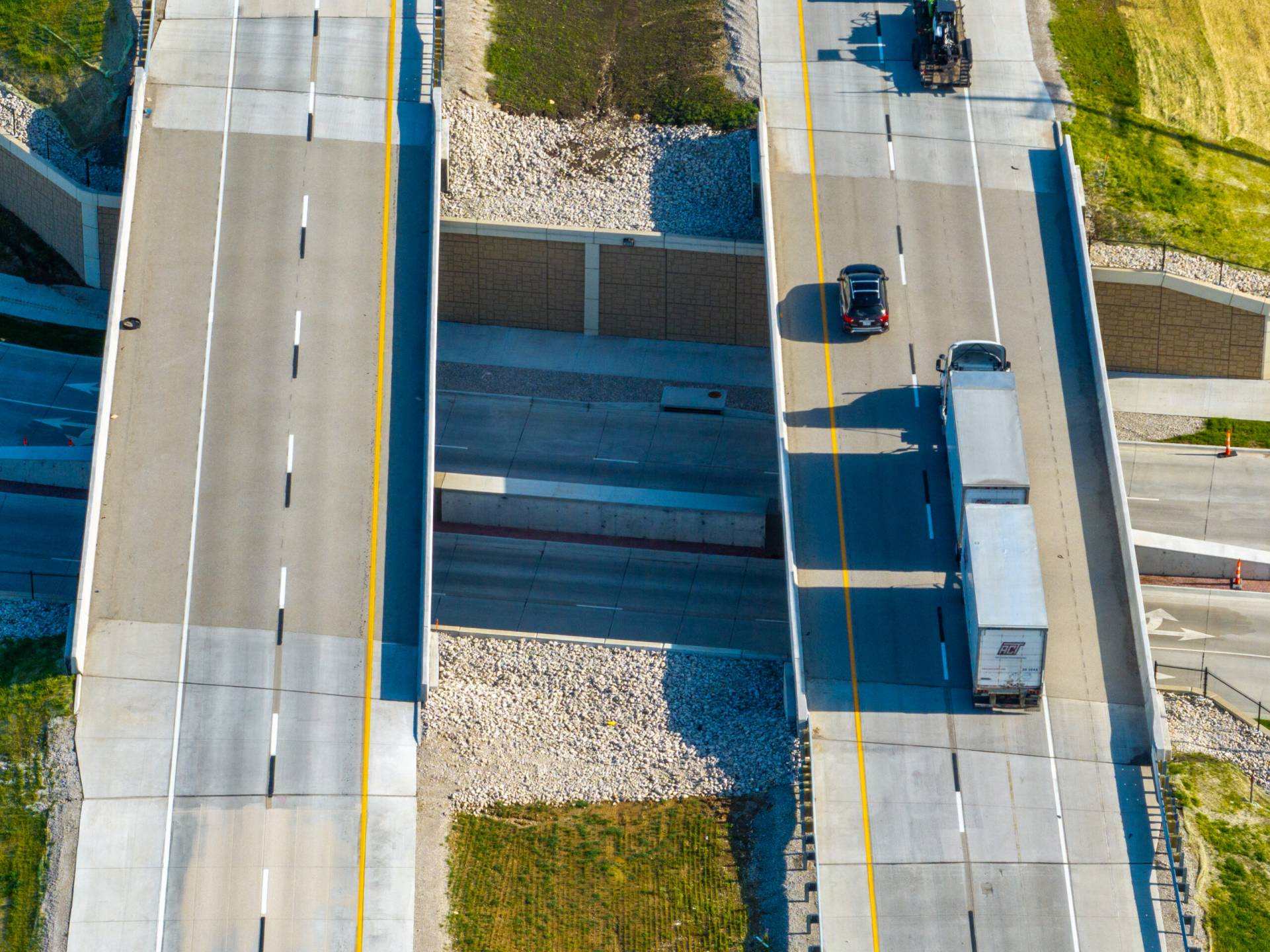
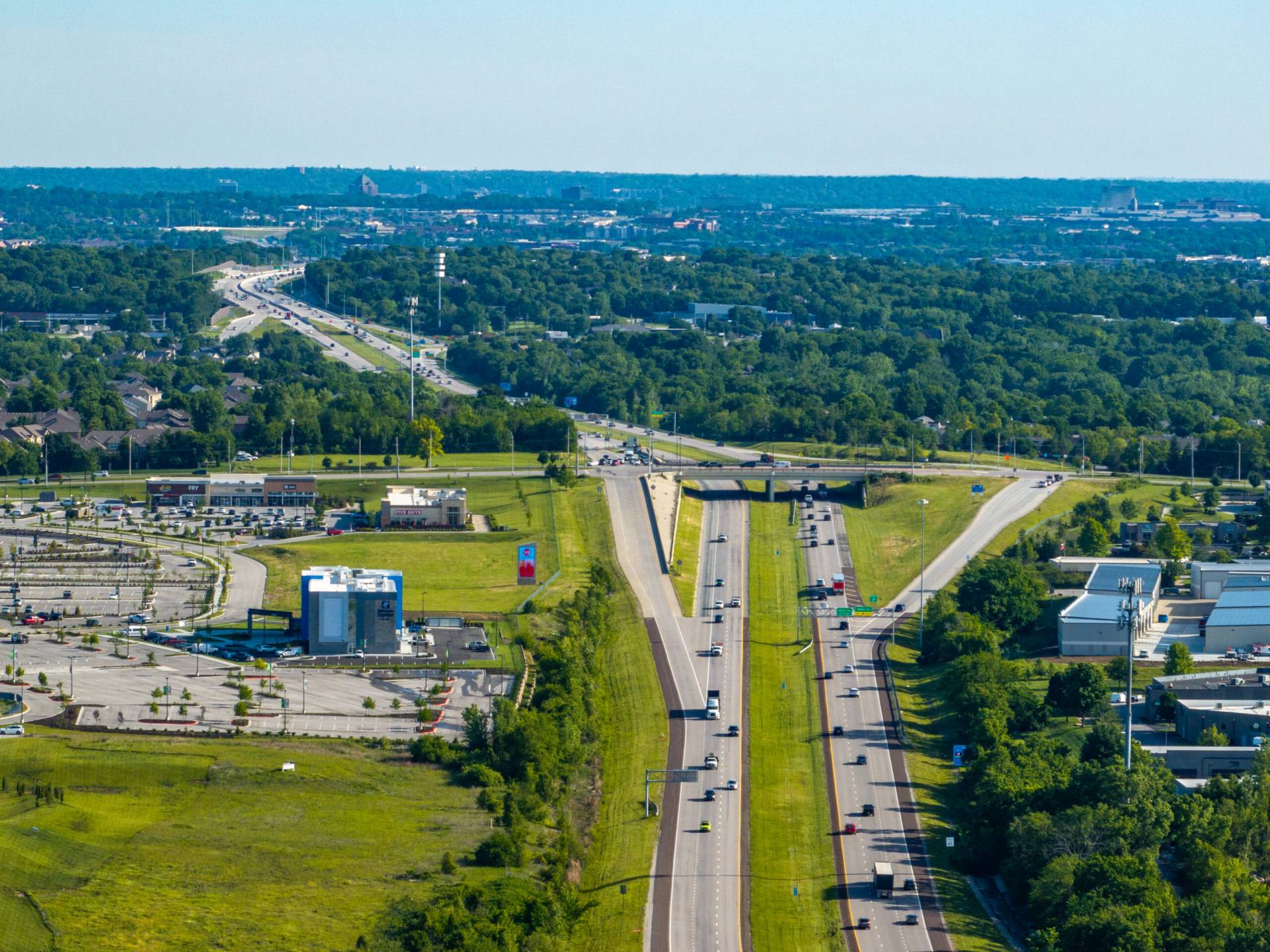
Beyond adding express lanes, the contractor rebuilt the entire 69Express corridor, replacing the general-purpose lanes, reconstructing 29 bridges and upgrading six interchanges.
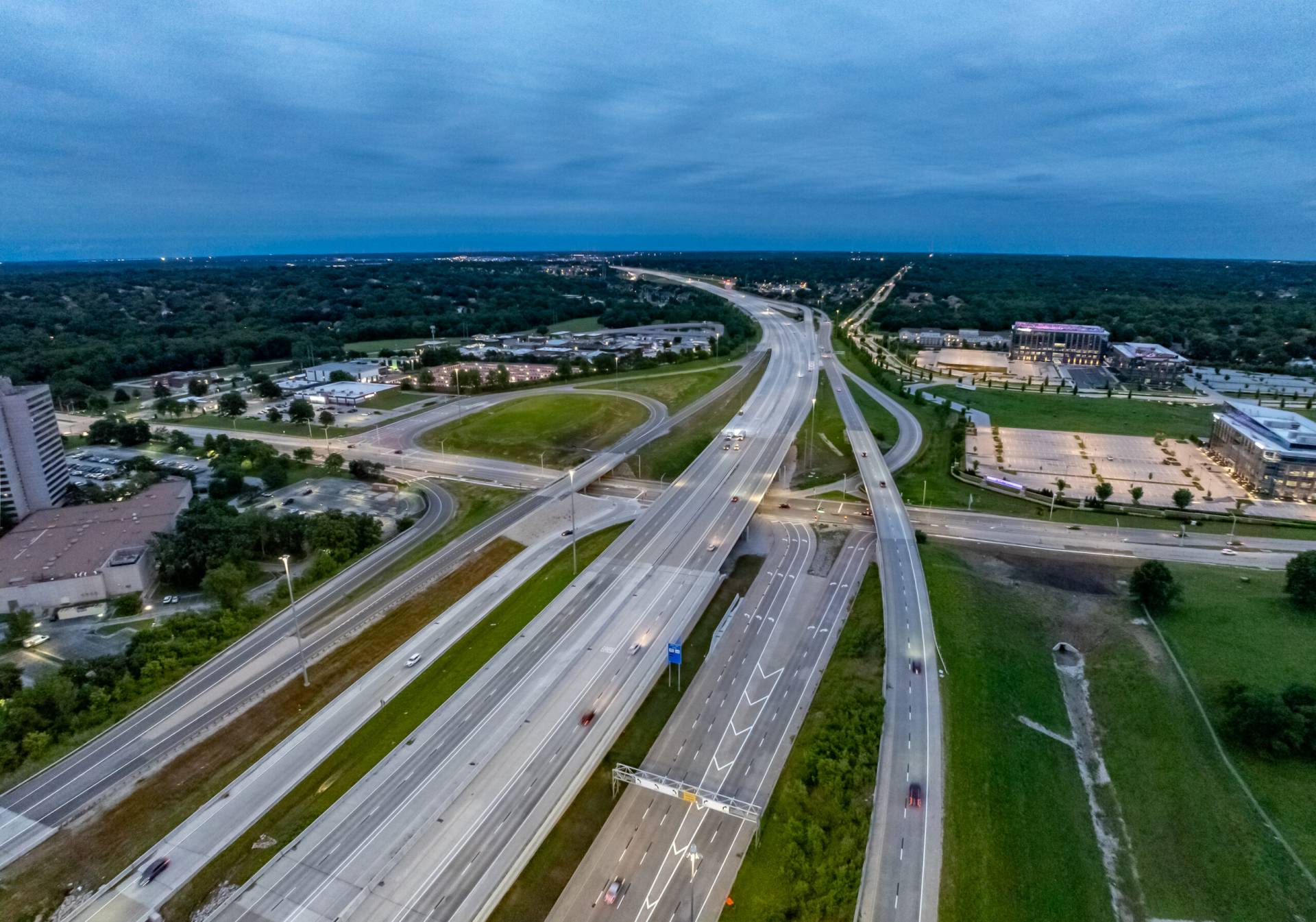
Reconfiguration of the Blue Valley Parkway interchange marked the project’s most significant geometrical overhaul. Previously, drivers entering southbound U.S. 69 from the interchange merged from a left-side ramp, creating safety risks and bottlenecks, especially for motorists crossing multiple lanes to reach the next exit. The project reconfigured the interchange, allowing safer merges into southbound U.S. 69 traffic.
New flyover ramps that connect Blue Valley traffic directly to and from the U.S. 69 express lanes further improved traffic operations.
Maintaining mobility throughout construction was one of KDOT’s primary goals. The team was required to keep at least two lanes of traffic open in each direction during the morning and afternoon peak periods, even as it reconstructed the heavily traveled corridor around them.
Meeting that commitment required careful staging and an intensive construction schedule. Crews worked 24 hours a day, six days a week, with paving and other activities that required lane closures, frequently scheduled overnight to minimize disruptions during the busiest travel periods.
This approach allowed major roadway, bridge and interchange improvements to advance while preserving capacity when travelers needed it most. By aligning construction sequencing and work hours with traffic patterns, the team minimized travel impacts while keeping the corridor and surrounding community moving.
Technology in action
Digital tools gave the 69Express team a more connected view of design and construction:
- Bluebeam: Enabled real-time plan reviews and collaborative comment resolution.
- HeadLight: Allowed inspectors to capture field notes and photos digitally instead of using traditional field books.
- ArcGIS: Combined design linework with frequently updated aerial imagery, creating an interactive view of construction progress.
Together, these tools made project information easier to share, access and act on.
A promise fulfilled
Opened in early 2026, the 69Express corridor uses variable-rate tolling that will ensure reliable travel times for decades without added capacity.
For KDOT, 69Express was a landmark project that alleviated one of Kansas’ worst bottlenecks while fulfilling the IKE program’s purpose.
“The project made a big impact in a short period of time,” said Steve Rockers, KDOT project director. “The highway is safer, and travel times during peak hours are predictable. KDOT’s goals and the promises made were realized with 69Express.”
“The project made a big impact in a short period of time. The highway is safer, and travel times during peak hours are predictable. KDOT’s goals and the promises made were realized with 69Express.”
SEE MORE ARTICLES
MORE DESIGNER STORIES
West Virginia Parkways Authority Travel Plazas
I-10 Express Lanes
KTA Tolling Conversion
Garden City Regional Airport
Buck O’Neil Bridge