
New York City advances a forward looking approach to coastal protection, public space and community connection
DESIGNER
2026
In the years following Superstorm Sandy, and as climate resilience along New York City’s waterfront continues to emerge as a community priority, the city launched one of the nation’s most ambitious portfolios of long term coastal protection projects. This groundbreaking “Big U” initiative addresses Lower Manhattan’s vulnerability to storm surge and flooding while increasing the vibrancy and accessibility of public spaces.
The BIG U calls for a protective system around the low-lying topography of Manhattan beginning at West 57th Street, going down to The Battery and then back up to East 42nd Street.
At the heart of that effort is the program’s first phase: the East Side Coastal Resiliency (ESCR) project. The $1.5 billion initiative, being delivered by New York City’s Department of Design and Construction (NYCDDC), will protect 2.4 miles of shoreline and 110,000 New Yorkers. This includes 28,000 Housing Authority residents in the diverse residential community of the Lower East Side, an area significantly impacted by Sandy.
Constructing a project of this scale — within an active urban environment, above and below vital infrastructure, and alongside one of the city’s most diverse communities — requires careful coordination across design, construction and public engagement.
As program and construction manager (PM/CM), HNTB partnered with NYCDDC to integrate the design and engineering with construction sequencing, traffic management and community outreach, helping turn a complex vision into a buildable, community‑centered reality.
“ESCR stands out as a first-of-its-kind, large-scale integrated flood protection system,” said NYCDDC Assistant Commissioner Bobby Issac. “It is the largest urban climate adaptation project in New York City. In addition to providing flood protection, the project sets the standard for future coastal resiliency design by enhancing waterfront spaces, improving accessibility and delivering improved recreational amenities to a vibrant and highly diverse community.”


Defense against the storm
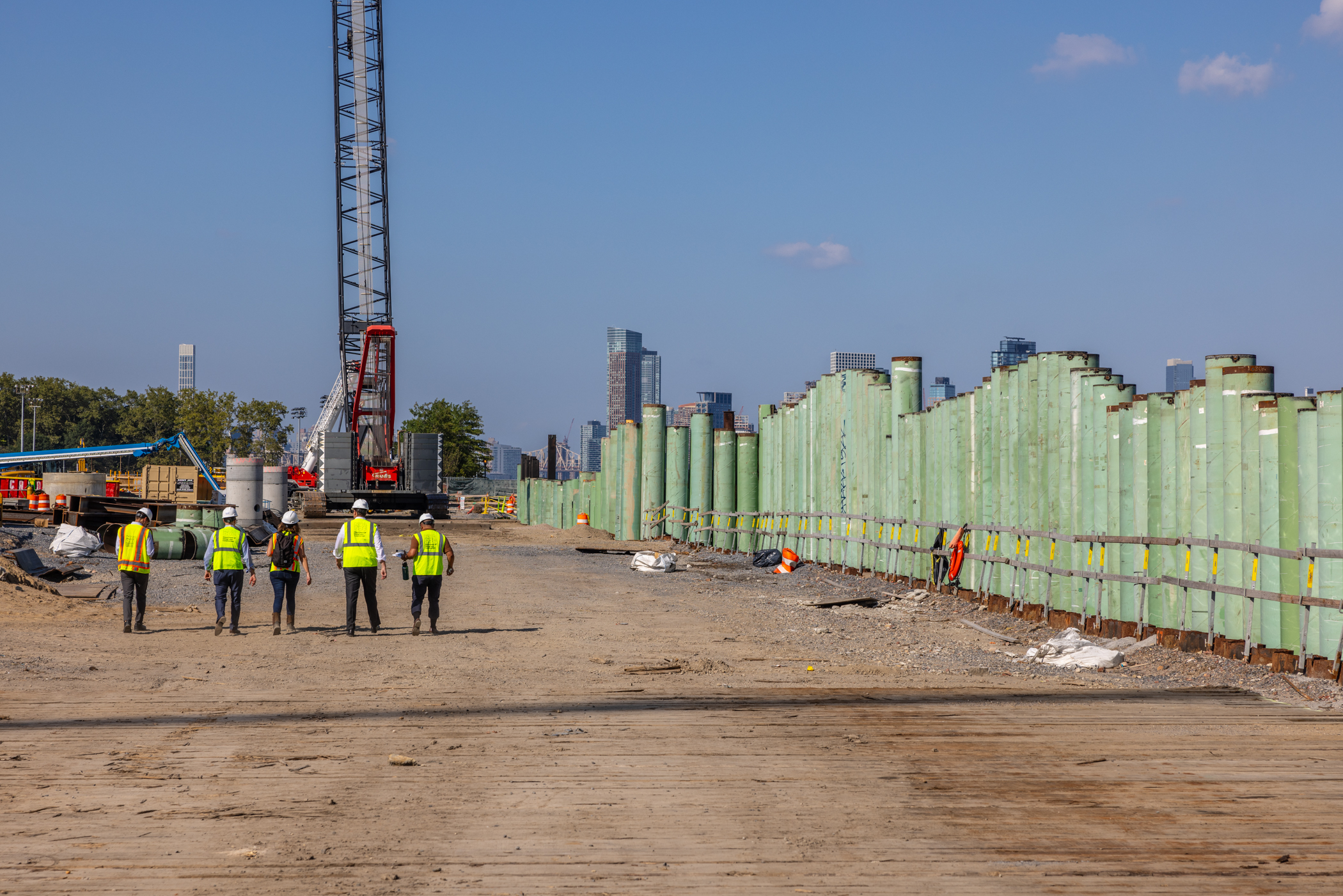
ESCR comprises two project zones. Project Area 2’s flood protection is visible within three parks, totaling more than 3,100 feet of floodwall and 12 floodgates, designed to withstand up to a 16-foot storm surge. Beneath the surface in Stuyvesant Cove Park, sheet piles driven deep into the ground act as a seepage barrier to prevent water intrusion below the flood barriers during storm surges. These deployable floodgates, part of a flexible system that can be activated quickly in emergencies, shield the city by closing off strategic entry points like streets and pedestrian paths during high-water events.
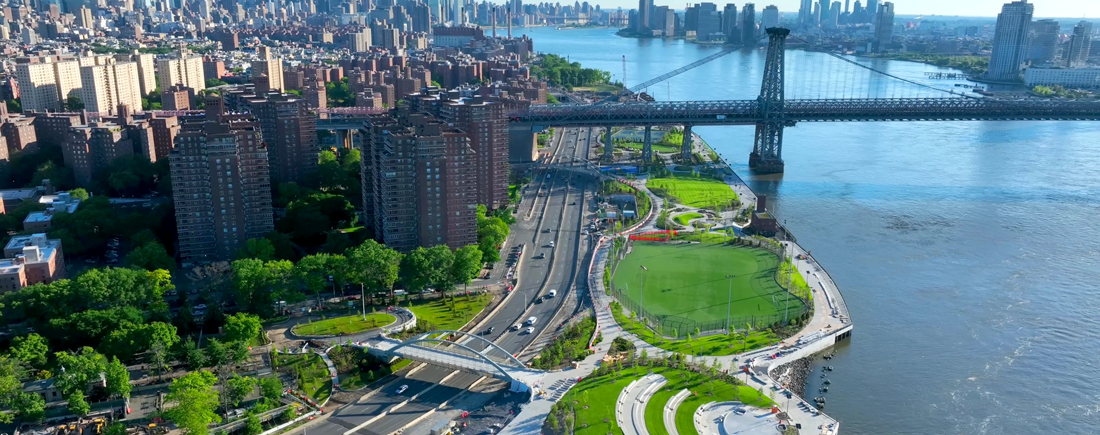
Project Area 1’s flood protection measures are integrated beneath the newly elevated East River Park, which was raised 8 to 10 feet using engineered fill placed above the projected future floodplain. This elevation strategy allows the flood protection system, including buried floodwalls, rebuilt drainage networks and strengthened utilities, to function seamlessly within the park’s landscape.
“East River Park’s grade was elevated above the projected floodplain,” said Zachary Dillon, HNTB project and construction manager. “This transformative flood protection strategy integrates protective features invisibly into the park’s design. Most park users won’t realize they’re standing atop a buried floodwall designed to protect the city.”
These flood protection measures are complemented by upgraded drainage systems, including a massive closure gate inside the interceptor sewer to control sewer inflows from outside the protected area. These systems improve runoff management and prevent the “bathtub effect,” where floodwaters get trapped inland during heavy rain events.
Electrical substations and pump stations also received protective measures to ensure that essential services would remain operational during extreme weather.
Resiliency in Scale
2.4 miles
Length of shoreline protected by ESCR’s flood defense system.
110,000 New Yorkers
Residents safeguarded from future storm surges, including 28,000 NYCHA residents.
3 new pedestrian bridges
ADA-compliant, scenic connections built using accelerated bridge construction.
55 acres
Size of East River Park, elevated above the floodplain and fully reimagined with modern amenities.
“ESCR stands out as a first-of-its-kind, large-scale integrated flood protection system. It is the largest urban climate adaptation project in New York City. In addition to providing flood protection, the project sets the standard for future coastal resiliency design by enhancing waterfront spaces, improving accessibility and delivering improved recreational amenities to a vibrant and highly diverse community.”
“This is a citywide initiative to protect, connect and inspire. ESCR is a model for resilient infrastructure and a testament to what’s possible when cities invest in both protection and public trust.”


Public amenities reimagined
Early design concepts for ESCR focused primarily on flood protection. The original plan proposed raising the half of the park closest to the East River and placing a floodwall along Franklin D. Roosevelt Drive, a six‑lane roadway adjacent to the park. After a complex constructability review with the city agencies, NYCDDC reenvisioned the project as an opportunity to both protect and enhance the park. Rather than elevating only a portion of East River Park, the city elected to rebuild the entire park at an elevation of 8 to 10 feet above prior grade, integrating flood protection infrastructure while modernizing amenities throughout the site. Construction would have closed East River Park for three years.
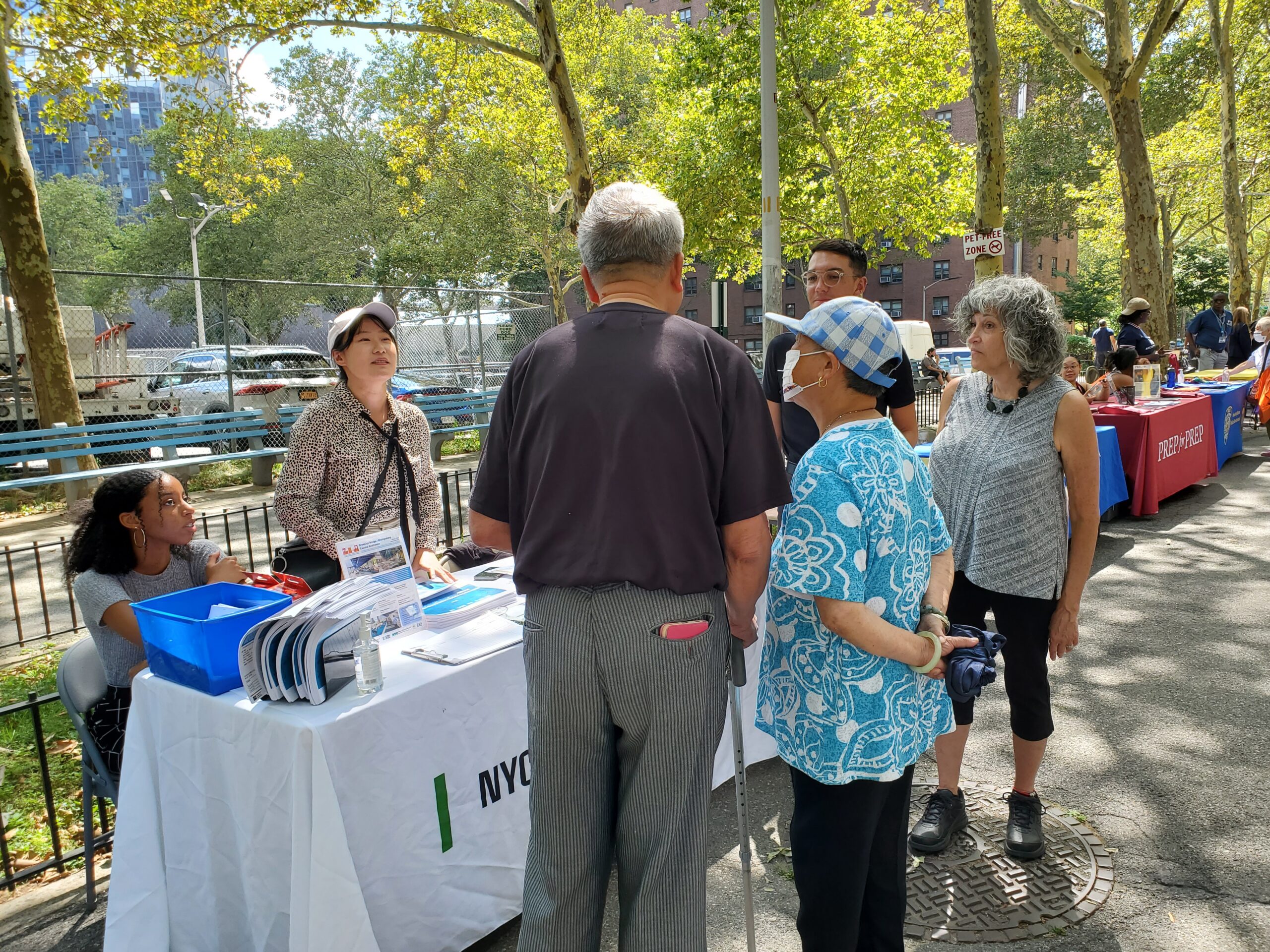
Through several years of public engagement meetings during the design phase, community input clarified just how essential access to the park was to area residents. In response, HNTB developed a phased approach that committed to keeping at least 42% of the park open throughout construction. Although phasing extended the project timeline, it aligned with the community’s priority to maintain ongoing access to their shared outdoor space.
“Generations of families in the neighborhood have grown up using East River Park,” said Desiree Gazzo, HNTB public engagement lead. “The park is their backyard and an extension of their home. Consistent, responsive, transparent, multilingual communications have allowed us to build trust over time, keeping the project construction moving forward.”
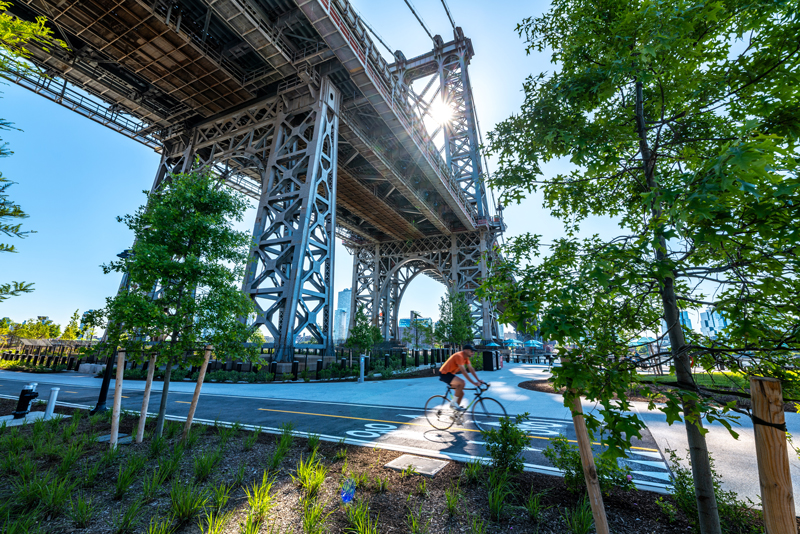
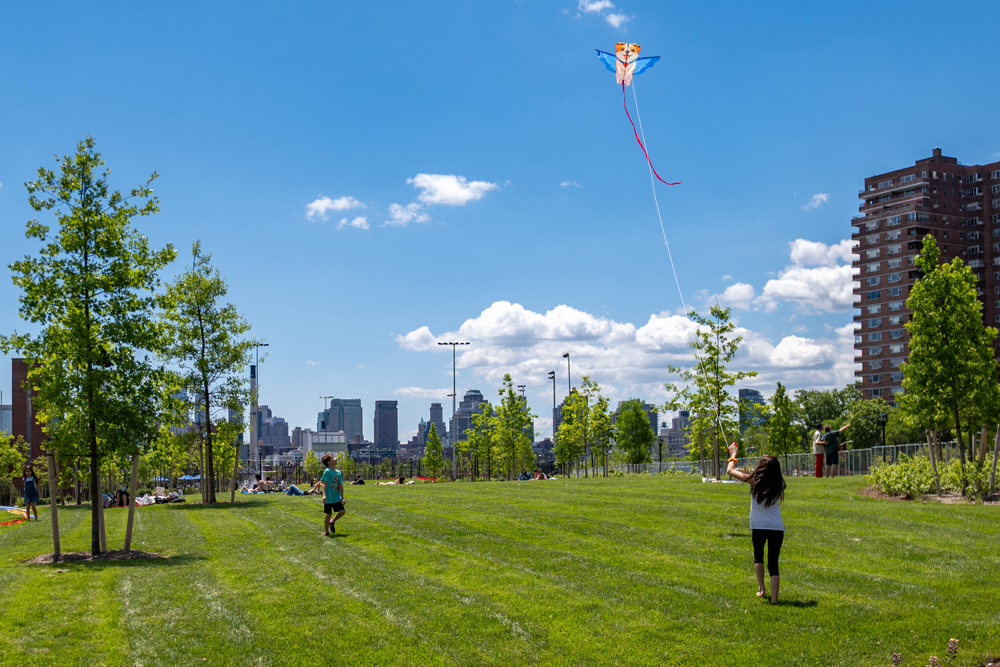
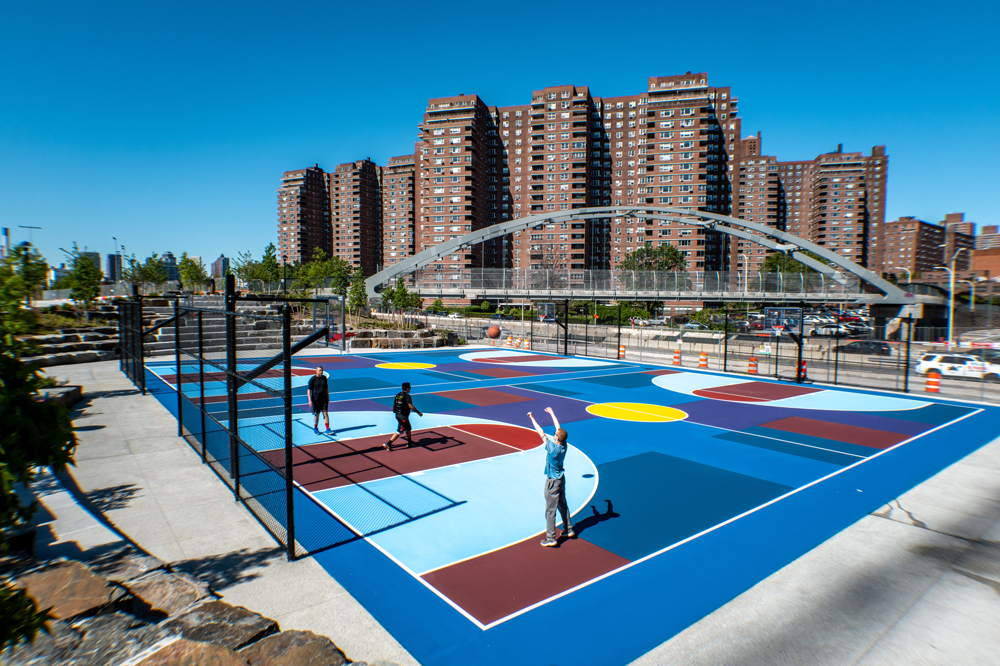
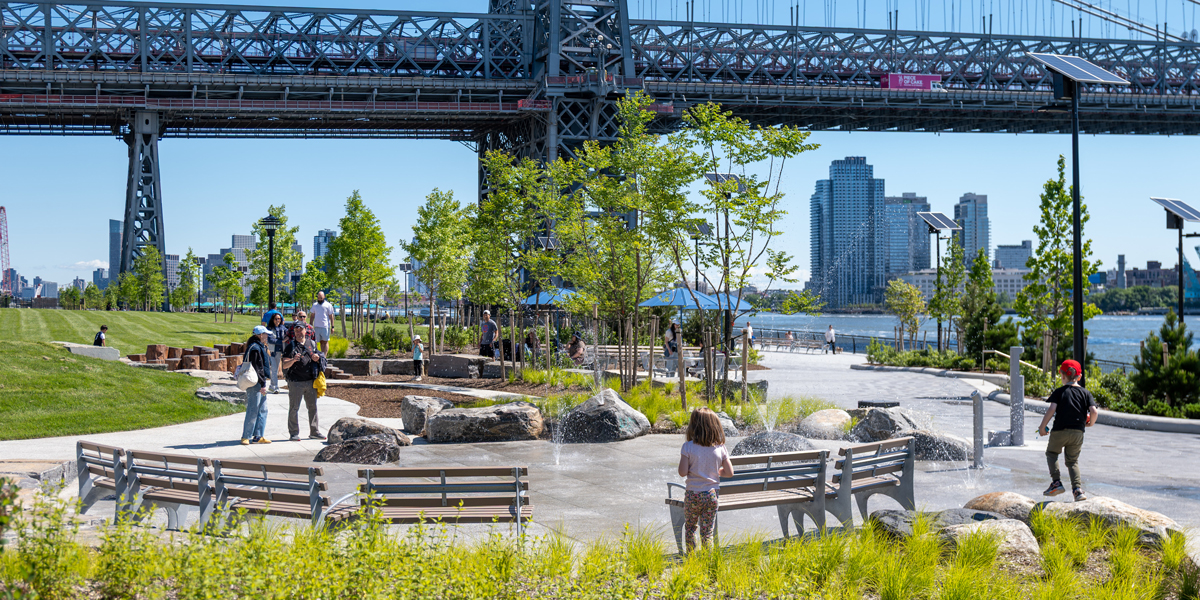
The commitment to extensive community engagement allowed the team to walk the residents through the construction of flood protection elements at monthly community meetings and small site visits. The project created an opportunity to update a park that had not seen significant improvements since the 1930s. Enhancements include new tennis and basketball courts, advanced drainage systems beneath the baseball fields, refreshed playgrounds and a new amphitheater replacing the former bandshell.
“The goal was not only to protect but also to enhance quality of life for residents,” Dillon said. “Because the design was developed with the community, residents who were once resistant to change are embracing the new park and incorporating it back into their lives.”
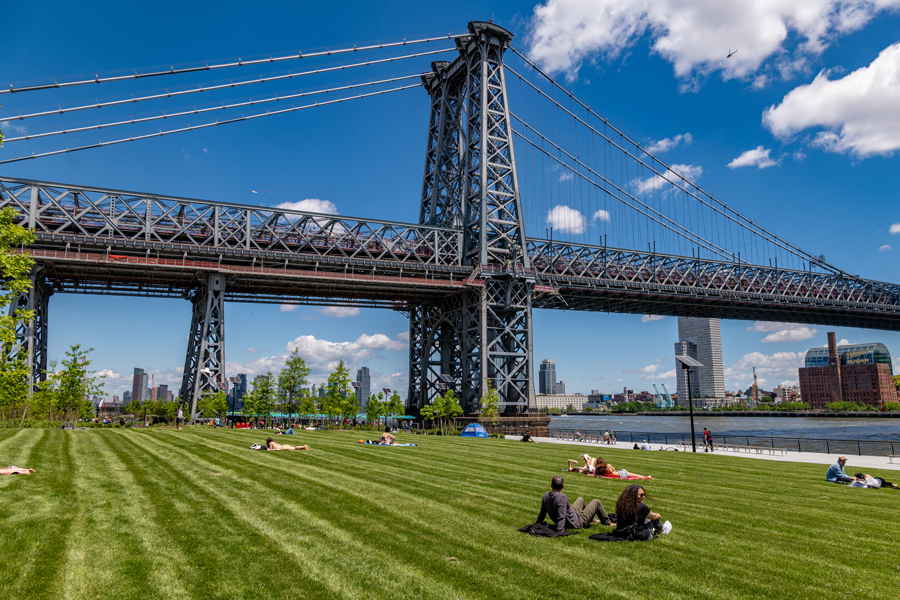
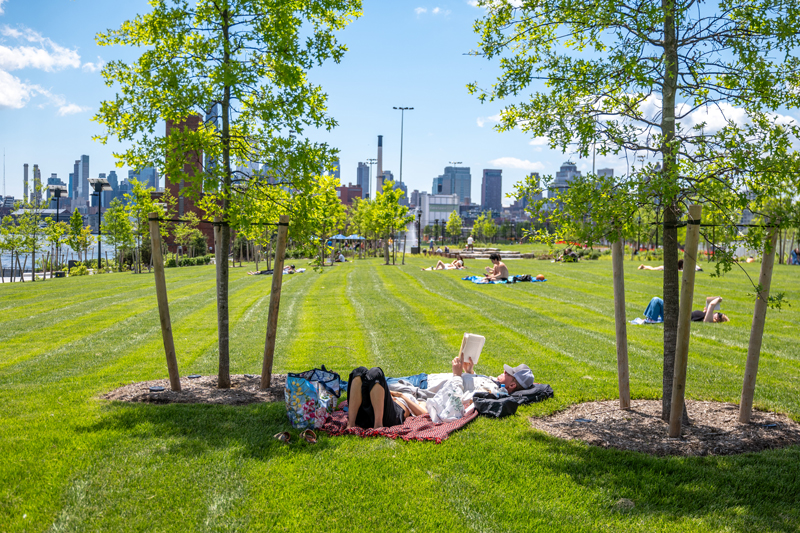
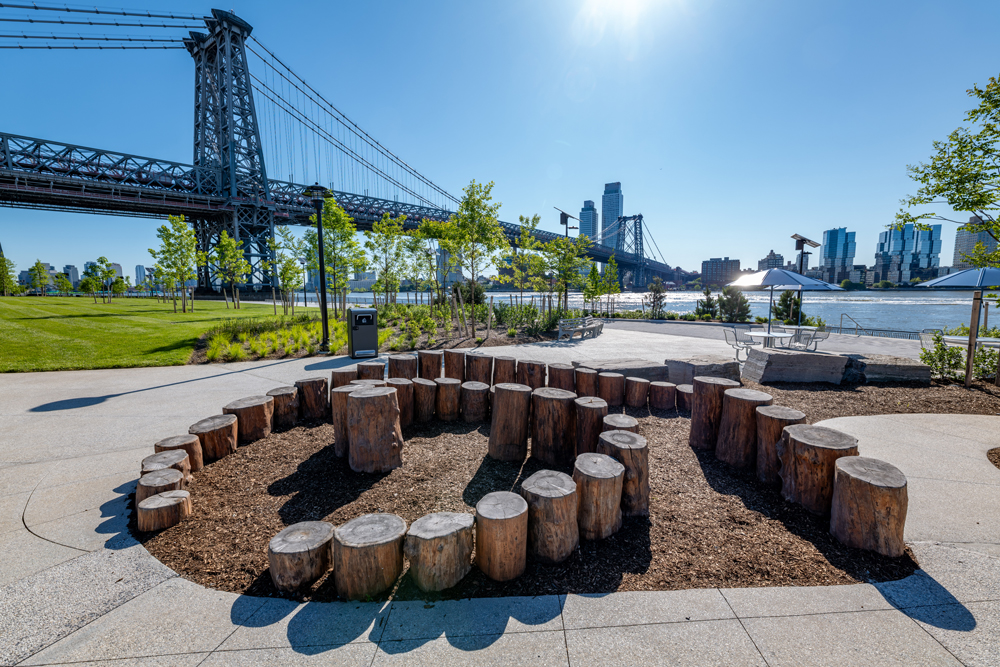
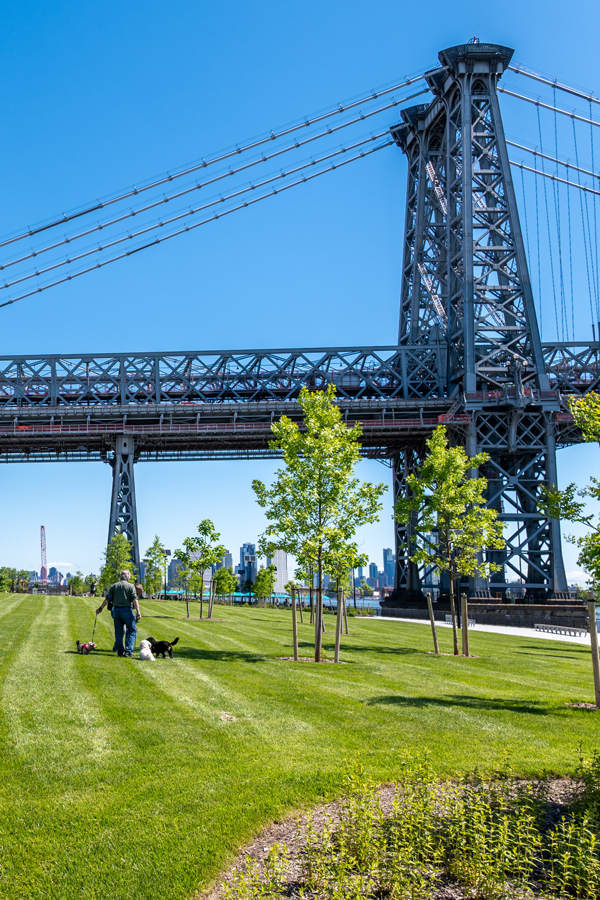
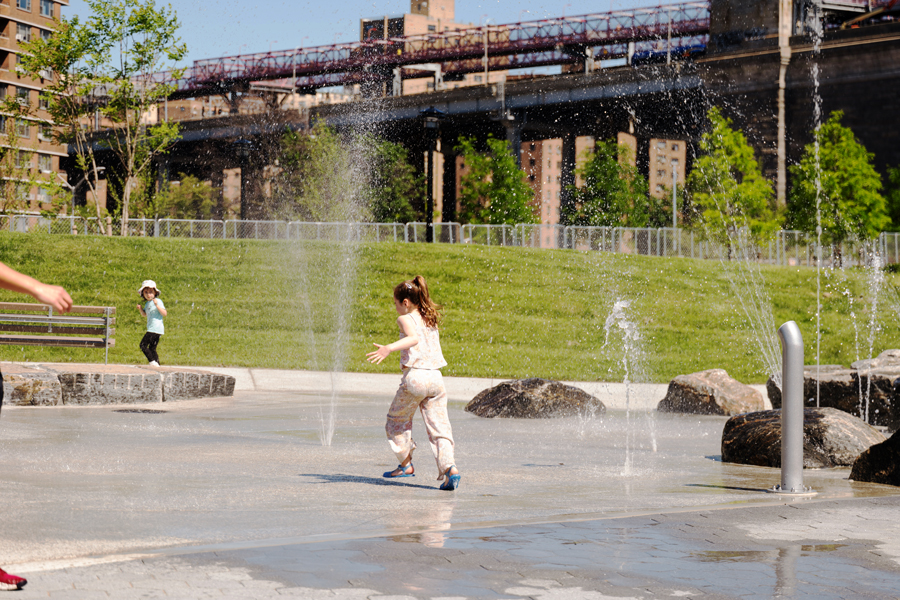
A nature exploration area built partially with trees reclaimed from the original park was added alongside open green space, while picnic and barbecue areas were relocated to meet current codes and encourage community use. HNTB’s landscape architects provided oversight to the selection and installation of hundreds of trees and tens of thousands of salt‑ and flood‑resistant plants and shrubs to restore greenery removed during construction. They even collaborated with the New York City Department of Parks & Recreation and local community to bring back an improved compost and education facility beloved by the community.
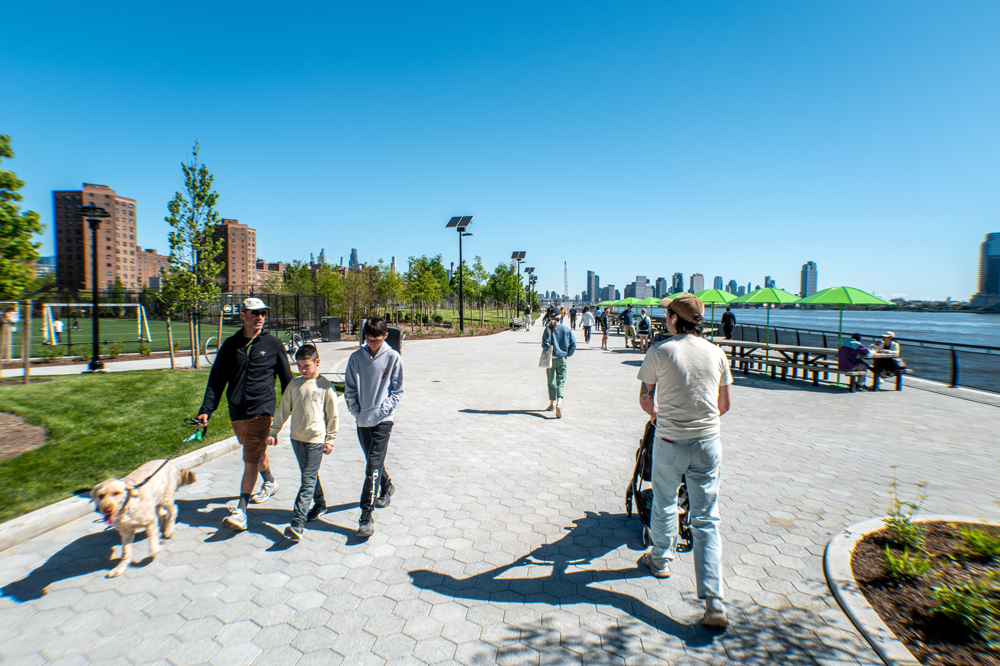
A major component of the park’s reconstruction is the new East River Park esplanade, redesigned to be built using precast concrete elements fabricated off-site. Rather than constructing the esplanade in place, which would require an on-site concrete plant and hundreds of truck deliveries, the waterfront structure was designed so the prefabricated pieces could be barged directly to the site and set onto existing pier caps.
This approach greatly reduced disruption to the neighborhood. Barging in the precast esplanade components eliminated an estimated 1,800 truck trips, and when including other barged materials, the project avoided more than 6,000 truck deliveries overall.
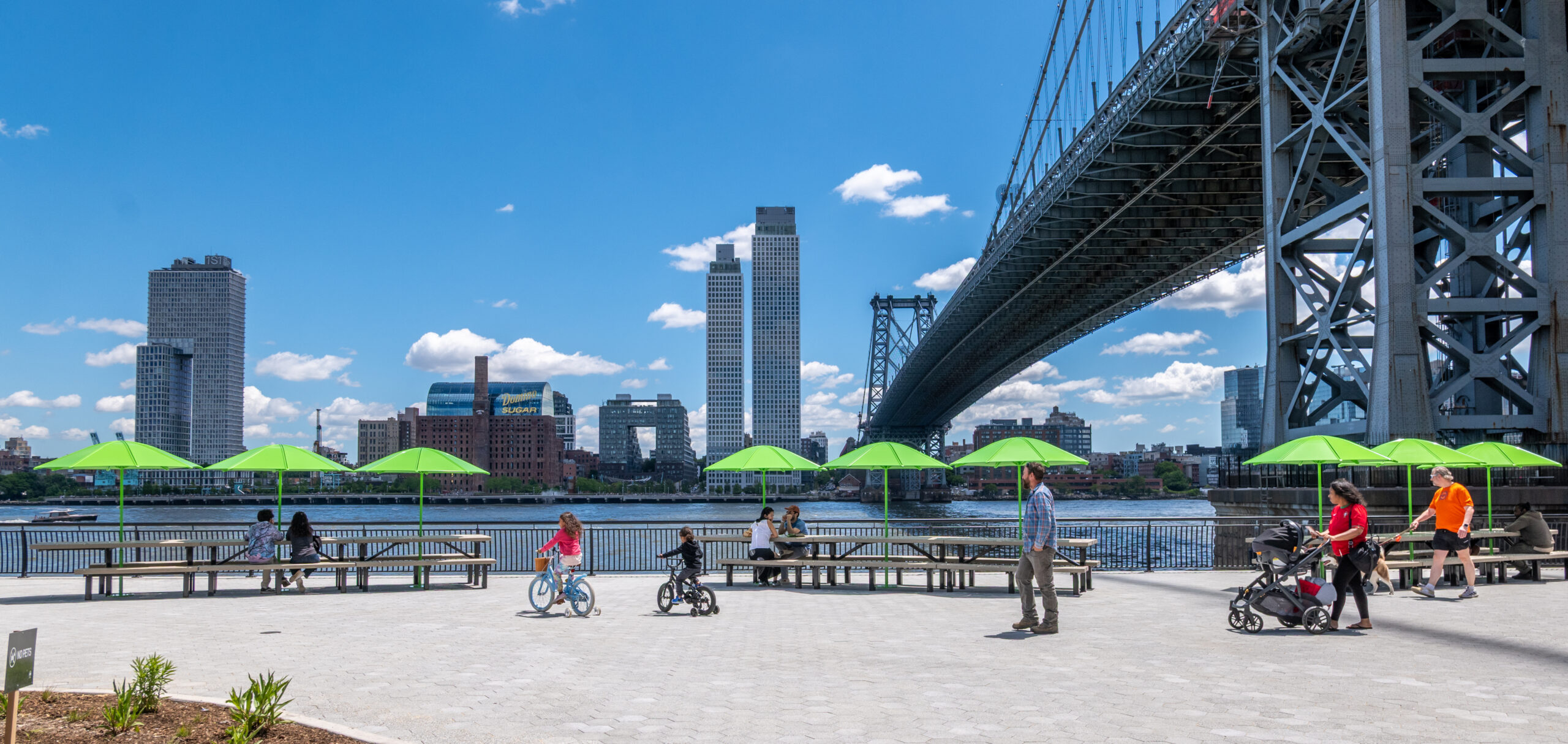
Along the park’s esplanade, the redesigned waterfront introduces lounge chairs, bar‑top tables, shaded rest areas and a variety of seating options to enhance the community’s daily connection to the water.
“NYCDDC viewed the ESCR project as an opportunity not just to protect communities from flooding, but to reimagine their connection to the waterfront in meaningful and lasting ways,” Issac said. “Rather than walling off neighborhoods, the project enhanced public spaces and the waterfront.”
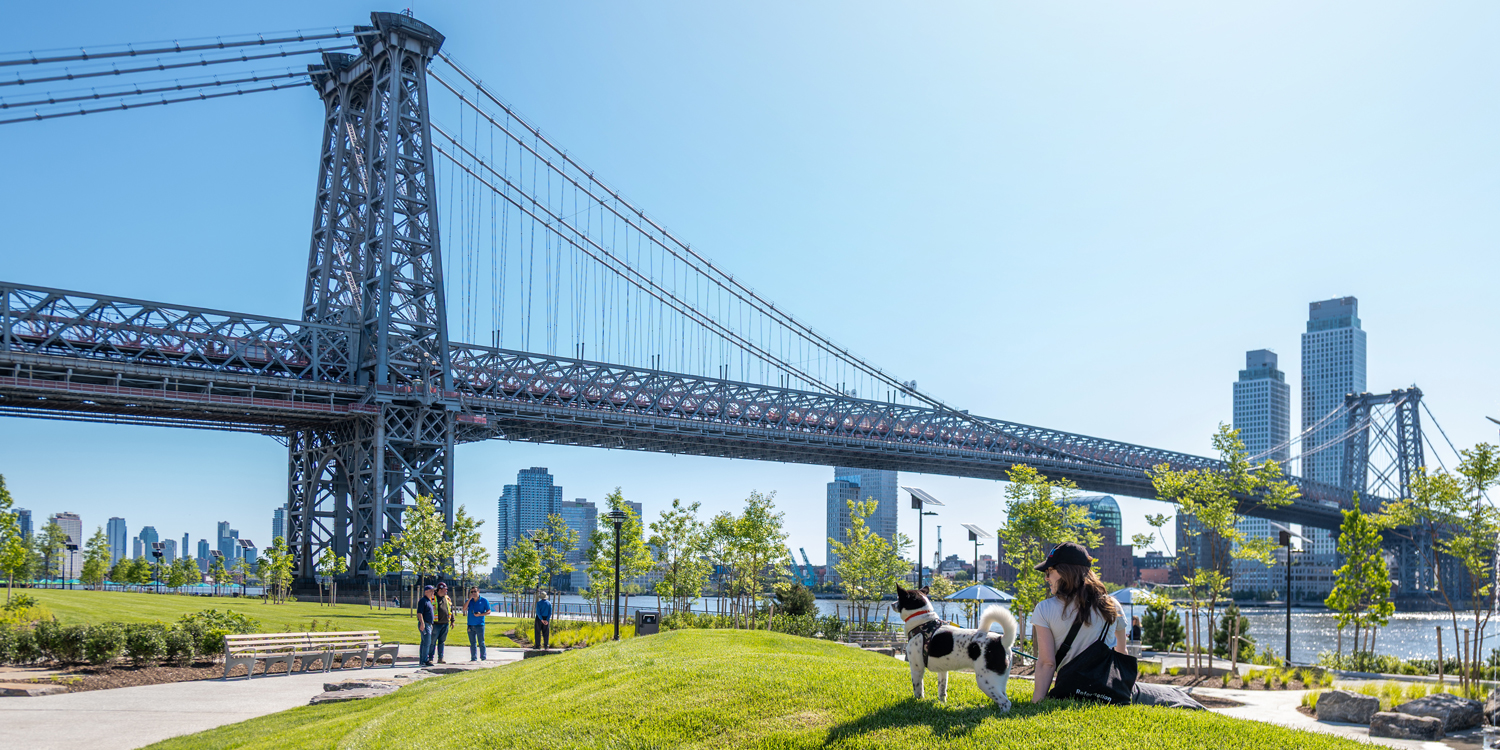
“Generations of families in the neighborhood have grown up using East River Park. The park is essentially their backyard. Extensive, transparent, multilingual communications built trust over time.”
“NYCDDC viewed the ESCR project as an opportunity not just to protect communities from flooding, but to reimagine their connection to the waterfront in meaningful and lasting ways. Rather than walling off neighborhoods, the project enhanced public spaces and the waterfront.”
Engineering in motion
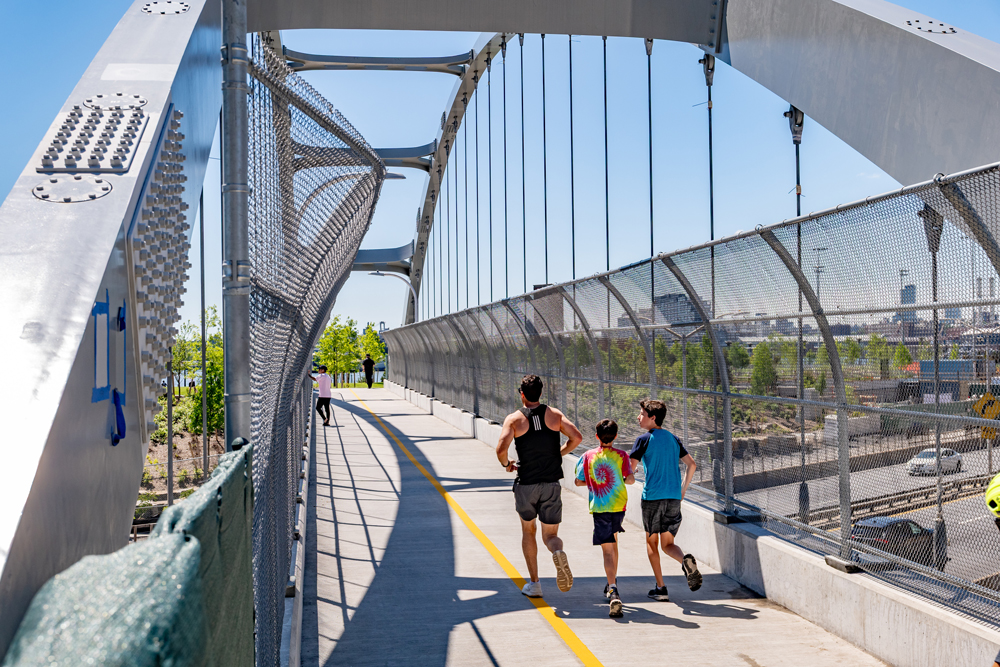
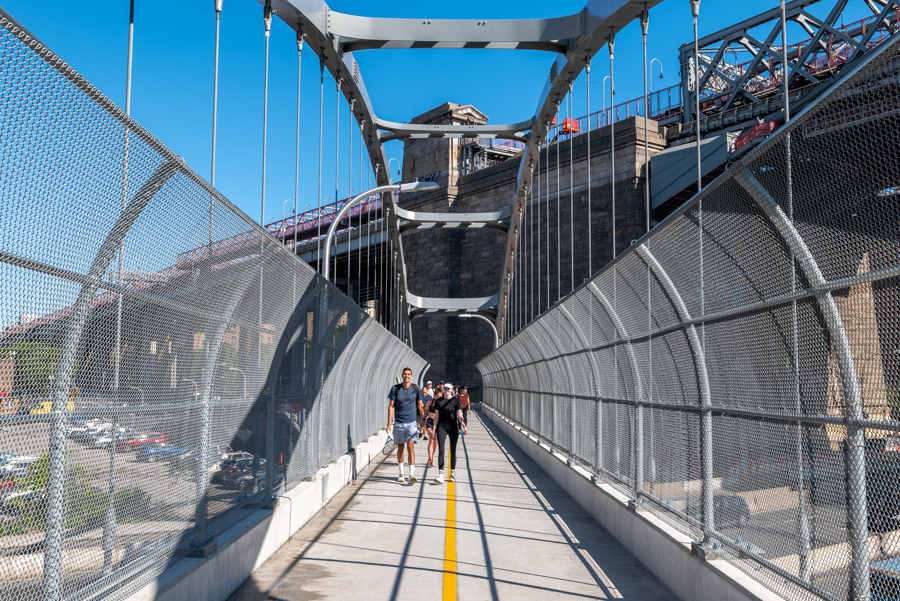
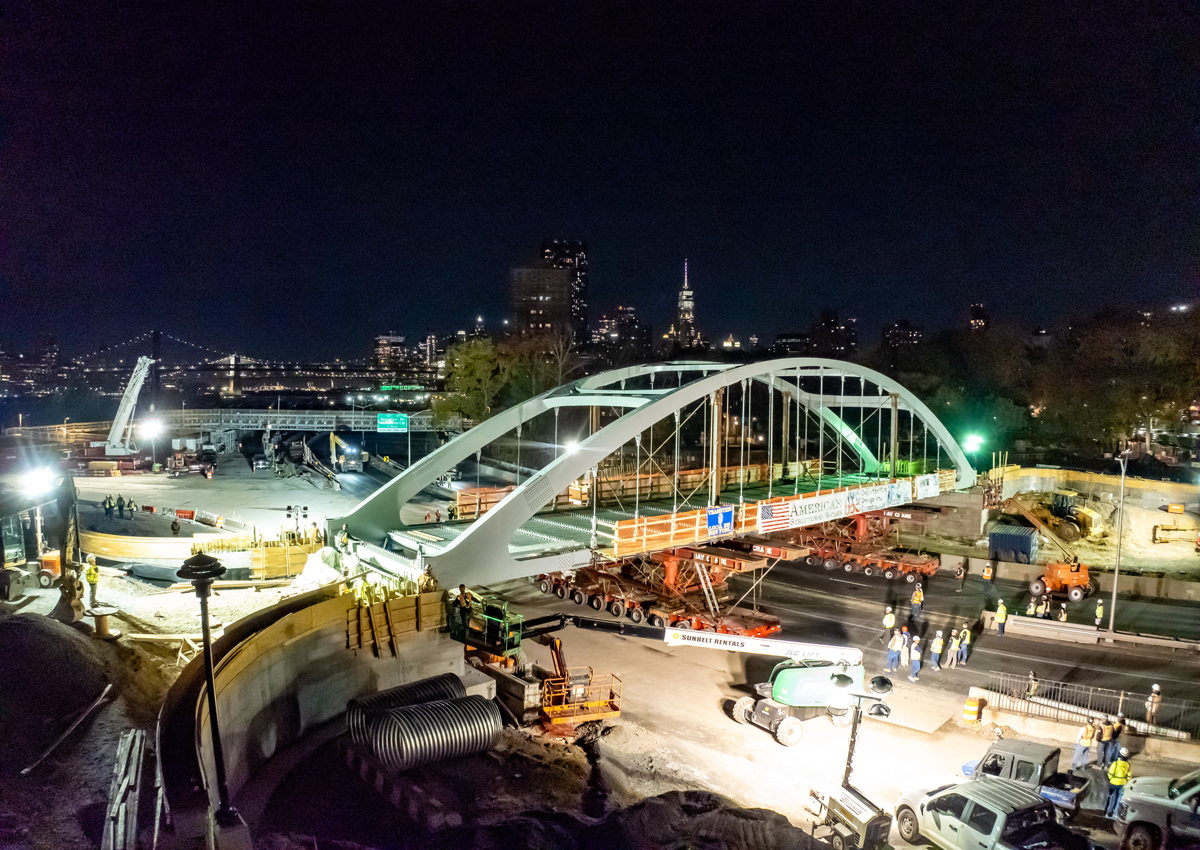
One of the project’s most striking achievements was the use of accelerated bridge construction (ABC) to replace two pedestrian bridges. Complicated switchbacks on those spans made it difficult for many people to cross over FDR Drive and access the park and the East River waterfront beyond.
The bridges were redesigned as ADA-compliant structures that provide seamless, scenic entry into the park. A third pedestrian bridge will be installed with a new entryway ramp allowing users to enter the park at grade.
Instead of building the bridges in place, the team constructed them off-site to minimize road closures.
“Once the bridges were complete, HNTB worked with the New York City Department of Transportation to pick the right times for installation,” Dillon said. “Without ABC, the work would have required months of FDR Drive closures and taken 60 shifts. With ABC, each finished bridge was placed on self-propelled modular transporters and rolled 1,200 feet along FDR Drive and into place in a single overnight shift.”

A model for urban resiliency
As the front-line defense in New York City’s preparation for future extreme weather, ESCR demonstrates how complex technical systems, including floodwalls, deployable gates and subsurface drainage, can be thoughtfully integrated with public space, mobility and community priorities. In one of the nation’s densest urban environments, the project shows how resilient infrastructure can protect critical systems while enhancing daily life.
“This is a citywide initiative to protect, connect and inspire,” Dillon said. “ESCR is a model for resilient infrastructure and a testament to what’s possible when cities invest in both protection and public trust.”
MORE DESIGNER STORIES
I-10 Express Lanes
Waterfront Seattle
Expertise
KC Levees Program
Transportation Point