Featured Insights - Integrated Transit and Aviation

Integrating transit and aviation design to enhance the passenger journey

How airports, agencies and communities can benefit from an integrated design approach

By Jeremy Sass and Andrés Chacón

For many travelers, a trip to the airport is shaped by a series of practical decisions: how to get there, how long it will take, where to park or disembark, and how much uncertainty to build into the plan. When access to the airport is fragmented or unpredictable, it can create unnecessary stress and diminish the overall passenger experience from the start. When access is coordinated and legible, the journey begins with clarity rather than improvisation.

Airports are increasingly prioritizing this reality as they plan for evolving access needs. Limited curbside capacity, physical constraints on expansion and rising expectations around accessibility make car-only solutions difficult to sustain. At the same time, transit agencies and municipalities are working to move more people efficiently without compounding congestion. Together, these forces are driving renewed attention to integrated, multimodal access, treating the airport as part of a regional network.

Effective airport access can include rail, bus, shuttle and park-and-ride services. The value lies not in any single mode, but in how those modes are planned and connected.

The case for integration

For airports, predictable multimodal access expands catchment and strengthens competitive position. When travelers can rely on how, and when, they will arrive and depart, they tend to plan their trips differently, arriving earlier, allowing time for connections or choosing nearby accommodations. Those behaviors translate directly into increased dwell time and non-aeronautical revenue.

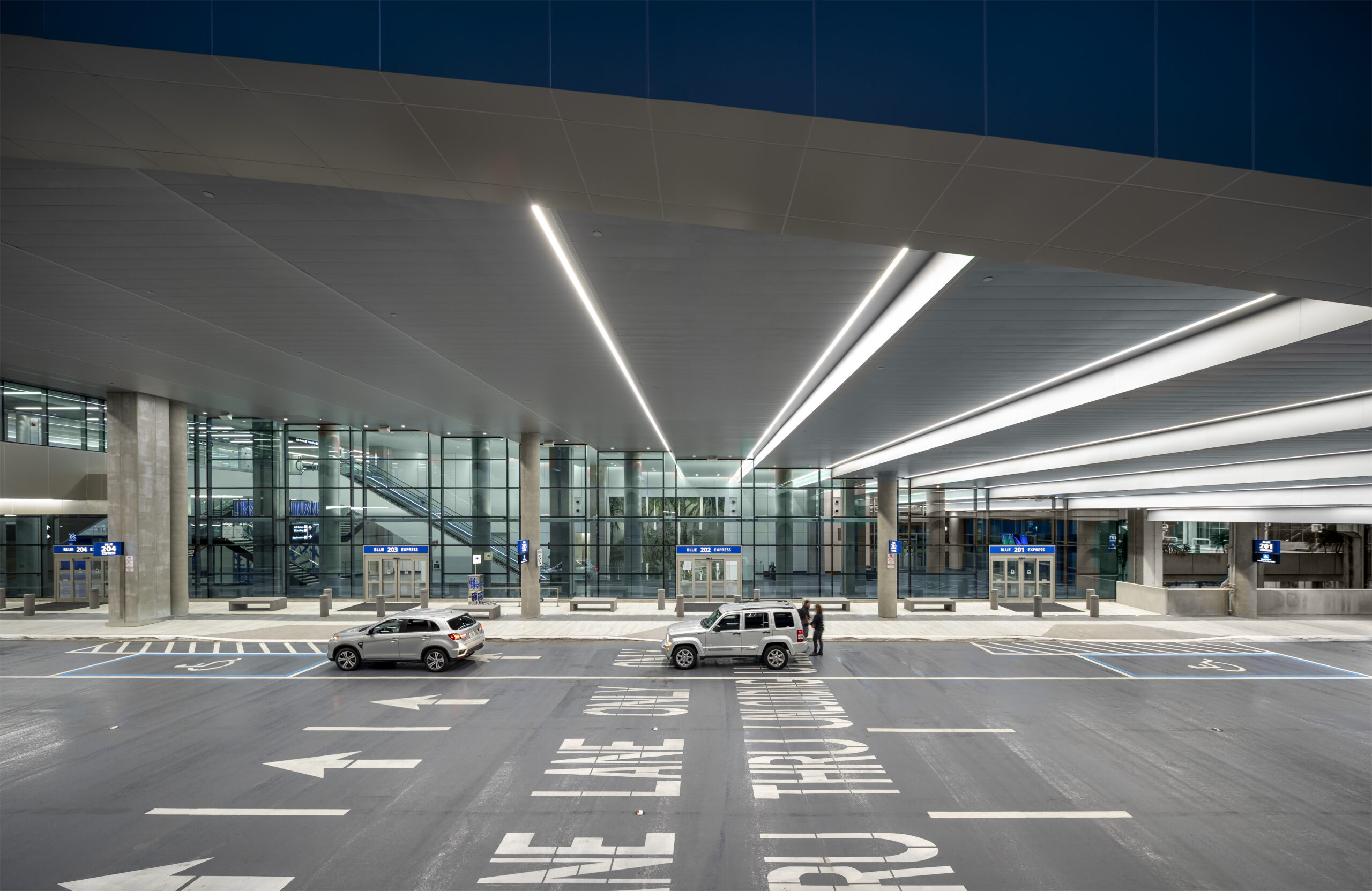
Integrated access also enables operational flexibility. At Tampa International Airport, a remote consolidated rental car facility connected by an automated people mover, combined with newly redesigned Express Curbsides, has redistributed passenger throughput across multiple arrival points. The Express Curbsides doubled curbside capacity and introduced redundancy into the system, allowing the airport to support projected growth over the next two decades without relying on continual curb expansion.

The same logic applies to passenger processing. Remote baggage check, now available at several U.S. airports, shifts portions of the journey away from the most constrained terminal spaces. Similarly, real-time digital information — such as security wait-time displays — makes system conditions more transparent. These tools reduce uncertainty and help distribute demand more evenly across often overcrowded security screening areas.

For transit agencies, airports represent a distinct rider market. Airport-bound trips often occur outside traditional commuter peak hours, providing steadier demand that can improve system utilization. High-quality airport connections also shape how transit is perceived as a purpose-built service, and therefore a higher priority option.

This is why multimodal planning extends beyond solely rail transit. Bus, shuttle and park-and-ride systems can perform exceptionally well when designed with reliability, clear branding and direct connections. When these modes are integrated from the beginning, they function as parts of a network rather than competitors for the same rider.

For municipalities, integrated access reduces congestion and emissions while expanding affordable mobility options. Well-connected airports function as regional anchors, linking tourism, business and local commerce into a broader mobility ecosystem instead of concentrating impacts at the curb alone.

Integration as a design strategy

Integrated transit and aviation planning also can fundamentally change what airports could do and who they serve.

Extending the airport beyond the terminal

When transit and aviation are designed as one system, the airport’s operational standards and wayfinding extend into transit stations, mobility hubs and park-and-ride facilities. Passengers encounter consistent cues, information and service expectations before they ever reach the terminal, easing navigation and reducing stress, which ultimately equates to a better passenger experience.

Distributing capacity rather than expanding footprints

Integrated planning allows airports to address growth by redistributing functions across a

coordinated network, rather than concentrating pressure within the terminal. Strategies such as remote check-in, consolidated ground transportation centers and satellite processing relieve constraints in the most limited spaces, allowing the terminal to function as one node in a broader system. This approach improves the experience not only for passengers, but also for the thousands of airport and airline employees who rely on the airport every day. By incorporating remote employee screening and alternative access points, airports can reduce demand on TSA resources, shorten passenger wait times and provide faster, more efficient site access for employees.

Expanding access

Planning across rail, bus, shuttle and rideshare allows airports to serve a broader range of travelers, including those without access to private vehicles and those with mobility constraints. Balanced access improves resilience and ensures the airport functions as a regional resource.

Delivering integrated projects

Integration requires delivery structures that support collaboration. Early alignment among aviation, transit and municipal agencies reduces redesign and strengthens environmental and community processes. Coordinating Federal Aviation Administration, Federal Transit Administration and Departments of Transportation funding strategies early helps maintain momentum across funding cycles.

Delivery models such as construction management at-risk (CMAR), progressive design-build and public-private partnerships (P3) approaches offer flexibility for complex, evolving projects. At Newark Liberty International Airport (EWR), a hybrid program delivery model with owner-managed integration is enabling the Port Authority of New York and New Jersey to lead on the transformative AirTrain Newark Replacement Program, an automated people mover train system linking EWR with the regional transit network.

The path forward

Airports are multimodal gateways embedded in regional systems of movement, commerce and daily life.

When access is planned as part of the airport — across rail, bus, shuttle and park-and-ride — it provides clearer choices for travelers, more resilient operations for agencies and infrastructure that is adaptable and flexible.

Integration transforms airport access into a strategic advantage. The opportunity now is for aviation and transit partners to continue aligning planning, funding and delivery to realize these benefits.

ABOUT THE AUTHORS

Jeremy Sass, Vice President, National Transit Architecture Practice Leader

Jeremy Sass, AIA, LEED AP
Vice President
National Transit Architecture Practice Leader
HNTB Corporation

Jeremy Sass, AIA, LEED AP, is national transit architecture practice leader at HNTB, where he leads strategic growth and design leadership for the firm’s transit architecture portfolio nationwide. A licensed architect with nearly 25 years of experience, Sass specializes in the planning and delivery of complex rail and multimodal transit facilities, aligning design excellence with operational performance and community goals.


Andrés Chacón, AIA, LEED AP, NCARB, RID
Associate Vice President
Senior Project Manager – Architecture | Group Director
HNTB Corporation

Andrés Chacón, AIA, LEED AP, NCARB, RID, is senior project manager and group director at HNTB, where he leads aviation architecture projects. A licensed architect and LEED Accredited Professional, Chacón brings more than 20 years of experience in airport and transportation facility design, including work coordinating multidisciplinary teams on major terminal and mobility projects across the U.S.