

InTransit
2026
VTA's customer-centric vision
The Santa Clara Valley Transportation Authority identifies core principles to develop its customer experience program
By Adam Burger, Innovative Mobility and Zero-Emission Bus Program Manager | Santa Clara Valley Transportation Authority
It is a pivotal time at the Valley Transportation Authority (VTA), which operates bus, light rail, and paratransit service in Santa Clara County, California. The post-pandemic ridership recovery has been uneven. Bus riders have returned strongly but only around half of light rail riders, who skew toward a tech commuter crowd, have returned. Increasing congestion is slowing down buses and causing on-time performance to worsen. The solution of adding more buses to slowing routes to maintain frequencies is difficult for an agency that already operates less service per capita than other Bay Area transit operators. Our trajectory is of rising operating costs while the utility of our service declines, which is not sustainable.
Meanwhile, transit alternatives, like ride-hailing services and robotaxis, offer point-to-point convenience, more seamless trip planning, and convenient payment options and continue to siphon riders away from transit. Without major changes to the product VTA offers, our cost-effectiveness and productivity challenges are likely to continue. This led our Board of Directors to challenge staff to reimagine what VTA offers with a renewed focus on improving customer experience.
Generally, VTA staff seek to provide high-quality customer experience, but the agency lacks a structured program to track and respond to customer sentiment. We don’t have a good way to justify why certain strategies are used or certain investments are made and little follow up occurs to assess if past decisions were good decisions.
VTA is developing a foundation for a Customer Experience (CX) Program that could launch in 2027. CX combines disciplines like surveying, data analysis, data presentation, product design, innovation, and project management and seeks to incorporate the voice of the customer in agency decisions.
To expedite the launch of a CX Program, we’re conducting a 32-point CX Assessment of how VTA currently handles customer experience and will subsequently produce a CX Roadmap that will effectively become the workplan of a future CX Program and include specific efforts, cost estimates, resource projections, and prioritization guidance.
Implementing CX at a large transit agency and moving the needle on rider perception of our service will take a lot of work and we’re fortunate that the launch of a CX Program aligns with a rare opportunity to secure new revenue. VTA has partnered with four other transit operators in the Bay Area on a regional sales tax ballot measure that is projected to generate a collective $14 billion over 14 years, about a quarter of which would come to VTA, should the measure be passed in November.
VTA would use those funds to increase the quantity of transit service that we offer allowing us to match our neighboring agencies in per capita investment. We would also make capital improvements that elevate transit priority, reversing the trend of slowing transit and ingraining operating efficiencies that last beyond the measure’s 14 years. We would also invest in other aspects of customer experience like better security, better transit information, and better station amenities.
The future of VTA's CX Program could embrace several themes:
Rider-Focused
The core of customer experience in a transit context is understanding the customer journey. In each step of a transit trip (considering taking transit, trip-planning, accessing transit, waiting for transit, fare payment, time on board, transferring, orienting themselves at their destination, and post-trip interactions with the transit agency) riders have specific information needs and concerns that need to be addressed. If a rider is uncertain or feels unsafe or uncomfortable about any step in the customer journey, they may be discouraged from taking transit. We need to learn more about the pain points our riders experience and show them that we are listening and responding.
CX Culture
Building a CX culture requires experiencing what your customers experience. I admire a practice employed by Cleveland RTA called Going to Gemba, which is based on a Japanese management concept that seeks to connect company leadership with gemba, the “actual place” where the work happens, such as a factory floor. The direct exposure that Cleveland RTA staff have to the service they offer has yielded several positive outcomes, including leadership taking immediate steps to correct issues they personally encounter, and imbuing a cultural awareness of customer experience among agency staff. I would love to implement a Going to Gemba program at VTA.
Data-Driven
I envision a future where VTA can make informed decisions based on detailed and actionable customer experience insights collected through a recurring surveying program. Those decisions would be tracked to measure their effectiveness and VTA could pivot if other strategies appear more promising. A theme at the recent APTA Marketing and Customer Experience Workshop was that data quality creates decision quality. VTA will need a robust data program to ensure we make the right investments in the future.
Transparent
I am a fan of LA Metro’s CX Action Plan. In that Plan, the agency commits to winning the customer’s trip choice each day, publishes customer experience survey data even if the results are critical, states what the agency intends to do to correct problems, and documents all the efforts the agency has undertaken in response to customer input. The continuity of listening, sharing, acting, and responding creates a complete feedback loop with riders that engenders trust and shows the agency cares. VTA has room to grow in each of those dimensions.
Accessible
We need to think about the customer through multiple lenses that account for the differing needs and sensitivities of each rider. Riders vary in age, gender, ability, language proficiency, and economic status, among other qualities, and we need to evaluate our service through each unique lens. I envision conducing system critiques and product testing with members of each of these constituencies, specifically focused on their unique circumstance.
Employee Innovation
Unlike most agency decisions that are made by executives or the Board of Directors, customer experience will likely draw inspiration and ingenuity from employees throughout the agency, particularly front-line employees like operators, station maintenance crews, and customer service agents. No doubt, VTA employees that directly touch the customer experience see where things could be improved or have ideas about what strategies would work but lack resources or are not empowered to achieve those outcomes. These front-line employees can be a creative engine and wonderful resource for a future customer experience program and VTA should seek their input and celebrate their successes.
Continual Learning
2026 is a big year for VTA as Santa Clara County hosts the Super Bowl, March Madness, World Cup matches, and a handful of events with international appeal, like three concerts with the K-Pop group BTS. Serving each event requires VTA to employ different strategies to meet the needs of diverse riders who may not be familiar with our service. Some strategies crafted for our out-of-town guests, like improved station signage and simpler ways to buy transit fares, have been hits with our regular riders as well. Learning from special events and continually evaluating our products through different lenses will serve us well.
ABOUT THE AUTHOR
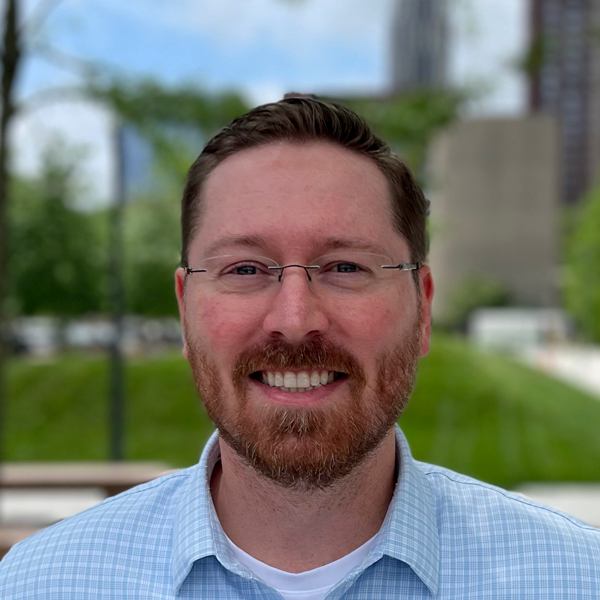 Adam Burger
Innovative Mobility and Zero-Emission Bus Program Manager
Santa Clara Valley Transportation Authority
Adam Burger leads VTA’s Innovation Program, Zero-Emission Bus Fleet Transition, and is preparing to launch a Customer Experience Program. His 23-year career at VTA also includes work with autonomous vehicles, bus rapid transit projects, and a redesign of the transit network. He’s been a VTA transit rider since he was a teenager in the 1990s. Contact him at [email protected].